
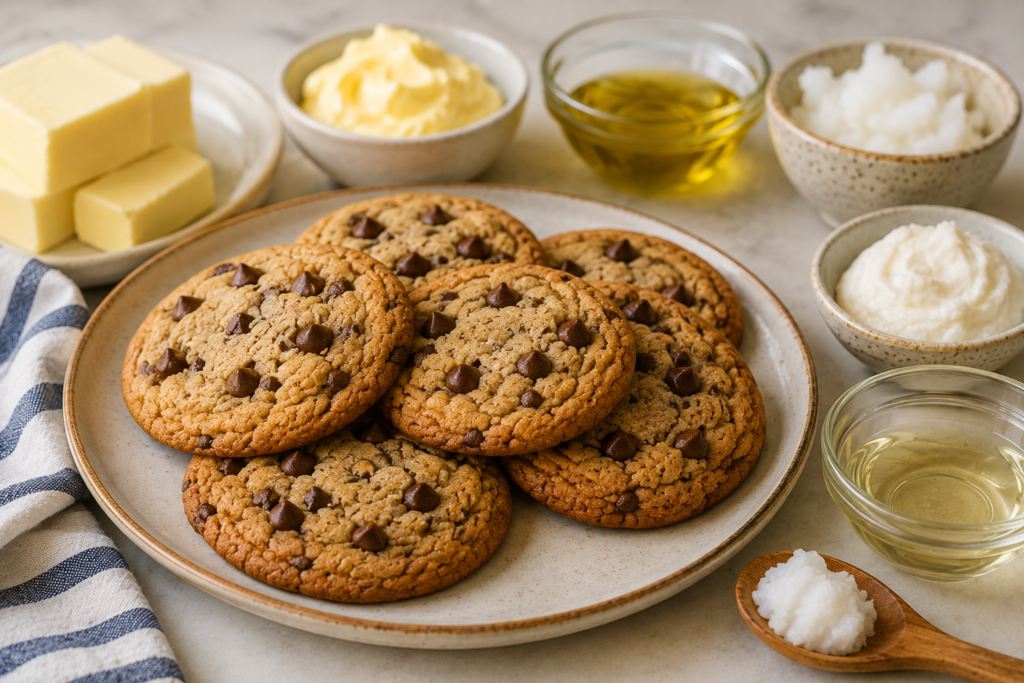
Out of butter? The best replacement depends on your cookies.
You’ve mixed the flour, found the chocolate chips and preheated the oven. Then you open the fridge.
No butter.
The good news is that several ingredients can stand in for butter in cookies. The less-good news is that they don’t all make the same cookie.
Butter affects spread, texture, browning, flavour and structure. The best substitute also depends on whether your recipe uses softened butter that gets creamed with sugar or melted butter that gets stirred straight into the dough. So before you reach for the nearest bottle of oil, it helps to know what kind of cookie you’re trying to save.
The best butter substitutes for cookies depend on how the butter is used in the recipe. So before you reach for the nearest bottle of oil, it helps to know what kind of cookie you’re trying to save.
Find the best substitute for your cookies
Need an answer for the exact recipe in front of you? Use the Ingredient Substitute Finder. Tell it how much butter you need, whether the butter is creamed or melted, any dietary requirements, and what you already have in the kitchen.
[kitchen_answers_substitute_finder]
What’s the best butter substitute for cookies?
For many cookie recipes, a baking-style plant butter or suitable stick margarine is one of the easiest substitutes because it behaves more like butter than a liquid oil or fruit puree.
But there isn’t one best choice for every cookie.
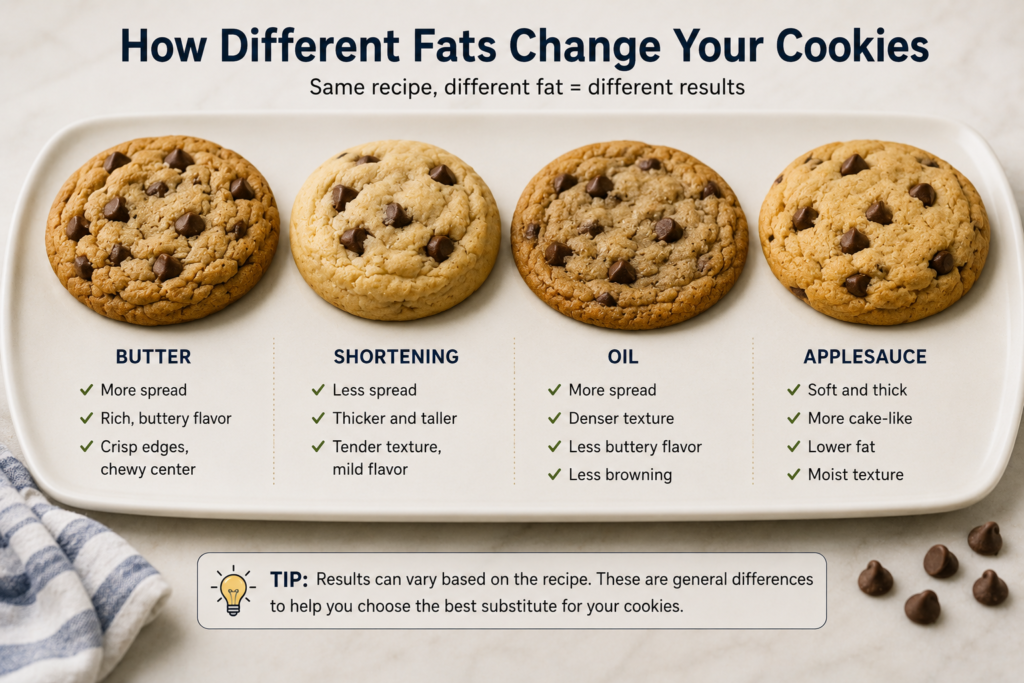
Shortening is useful when you want cookies that spread less and hold their shape better. Coconut oil can work in some recipes, especially when a slight coconut flavour isn’t a problem. Neutral oil can work better in recipes that already use melted butter, but it changes the way the dough behaves. Applesauce adds moisture, but it usually pushes cookies toward a softer, more cake-like texture.
The right choice depends on the job the butter was doing in the first place.
1. Plant butter or baking margarine
If you want a simple dairy-free swap that stays fairly close to the original cookie, a plant butter made for baking is often a good place to start.
A solid baking fat can usually be softened, mixed with sugar and used much like regular butter. That makes it a better fit than liquid oil when the recipe depends on creaming.
Formulas vary, though. Very soft tub spreads may contain more water and less fat than stick-style products, which can change spread and texture. If the package gives baking directions, follow them.
If dairy avoidance is due to an allergy, check the actual ingredient label rather than assuming every margarine or plant butter is dairy-free.
2. Shortening
Shortening is one of the most dependable solid-fat substitutes for cookies.
It melts at a higher temperature than butter, so cookies made with shortening generally spread less before their structure sets. That often means thicker cookies with a softer, more tender texture.
The trade-off is flavour. Shortening is much more neutral than butter, so the finished cookie can lose some of that rich buttery taste.
If you’re making a cookie where shape matters more than butter flavour, shortening can be a very useful option.
3. Coconut oil
Coconut oil can work well in some cookie recipes because it is solid or semi-solid at cooler room temperatures.
It can still change spread and texture, and unrefined coconut oil may bring a noticeable coconut flavour. Refined coconut oil is usually milder.
For recipes built around creaming butter and sugar, coconut oil may not behave exactly like butter. For recipes that use melted butter, it can be easier to work with.
4. Vegetable or other neutral oil
Oil is convenient, but it isn’t simply liquid butter.
Butter contains both fat and water and is solid at normal room temperature. Most cooking oils are almost entirely fat and stay liquid. That difference affects how cookie dough spreads and sets.
Oil is a more reasonable option when the original recipe calls for melted butter. If the recipe says to cream softened butter with sugar, replacing it with oil removes an important part of the mixing process and can produce flatter, denser cookies.
So yes, oil can work – but it’s much more recipe-dependent than a simple one-for-one swap suggests.
5. Applesauce
Applesauce is useful when you want moisture and some binding, but it isn’t trying very hard to be butter.
It contains very little fat, so cookies made with applesauce can be softer, less rich and more cake-like. That may be perfectly fine if that’s the result you want.
If your main goal is to make a classic cookie taste as close to the original as possible, applesauce usually wouldn’t be my first choice. If your goal is a softer or lower-fat cookie, it becomes much more interesting.
If the recipe says “cream the butter and sugar,” pay attention
That little instruction matters more than it looks.
Creaming softened butter with sugar traps tiny pockets of air in the fat. Those air pockets help influence the structure and texture of the cookies as they bake.
That’s why pouring vegetable oil into a recipe designed around creamed butter isn’t the same substitution as replacing melted butter.
For a creamed-butter cookie, start by looking for another solid baking fat such as a suitable plant butter, margarine or shortening.
What if the recipe uses melted butter?
Now you have a little more flexibility.
Melted-butter cookies aren’t relying on the creaming process to trap air in the same way. That means some liquid or melted-fat substitutes become more practical.
You still shouldn’t expect an identical cookie. Butter contributes water, milk solids and flavour that oil doesn’t. But knowing the recipe starts with melted butter changes which substitutes are reasonable.
This is exactly why a generic list of butter substitutes can only take you so far.
How changing the fat can change your cookies
Changing the butter can change:
- Spread: how wide and thin the cookie becomes.
- Texture: whether the cookie is crisp, chewy, tender, crumbly, soft or cake-like.
- Browning: butter contains milk solids that contribute colour and flavour during baking.
- Flavour: shortening is neutral, while coconut oil and olive oil can bring their own flavours.
- Structure: especially when the original recipe relies on creaming butter and sugar.
If your substitute produces a cookie that’s a little different from the original, that doesn’t automatically mean something went wrong. You changed one of the ingredients doing quite a lot of work.
Which substitute should you use?
If you want the closest general replacement, start with a baking-style plant butter or suitable stick margarine.
If you want less spread and a thicker cookie, shortening is worth considering.
If the recipe uses melted butter, coconut oil or a neutral oil may be more workable than they would be in a creamed-butter recipe.
If you’re deliberately aiming for a softer, more cake-like or lower-fat cookie, applesauce may suit the goal.
And if you’re not sure, use the Ingredient Substitute Finder rather than guessing.
Open the Ingredient Substitute Finder and select Butter + Cookies to get a recommendation based on your recipe.
Frequently Asked Questions
What is the closest substitute for butter in cookies?
A baking-style plant butter or suitable stick margarine is often one of the closest choices because it remains a solid fat and can usually be softened or creamed. The best choice still depends on the cookie recipe.
Can I replace butter with shortening in cookies?
Often, yes. Shortening can replace butter in many cookie recipes, but the cookies usually spread less and may be softer or more tender. You also lose some butter flavour.
Can I use oil instead of butter in cookies?
Sometimes. Oil is more suitable when the recipe uses melted butter. It is less suitable when the recipe depends on creaming softened butter with sugar.
Can I use applesauce instead of butter in cookies?
You can use applesauce in some recipes, but expect a softer, more cake-like cookie with less richness. It isn’t the closest replacement when you want a classic butter-cookie texture.
What butter substitute helps cookies spread less?
Shortening is a useful option because it has a higher melting point than butter, so cookies tend to spread less before the dough structure sets.
What is a good dairy-free butter substitute for cookies?
A plant-based butter designed for baking is often the simplest place to start. Check the package ingredients and baking directions because formulations vary.
Related Kitchen Answers
Planned future internal links (activate only after the destination page is live):
- Butter Substitutes -> https://mykitchenanswers.com/ingredient-substitutes/butter-substitutes/
- Egg Substitutes for Baking -> https://mykitchenanswers.com/ingredient-substitutes/egg-substitutes-for-baking/