
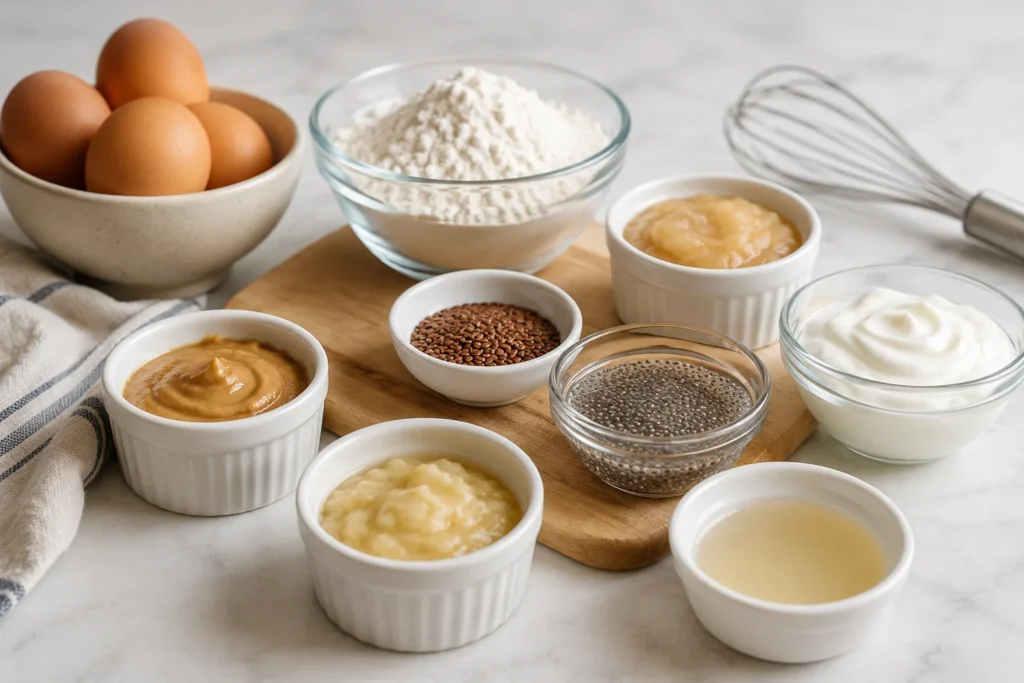
No eggs? Start by figuring out what the egg is doing in the recipe.
You reach for the egg carton halfway through baking and find it empty. Fortunately, a good egg substitute for baking may already be in your kitchen—but the best replacement depends on what you’re making.
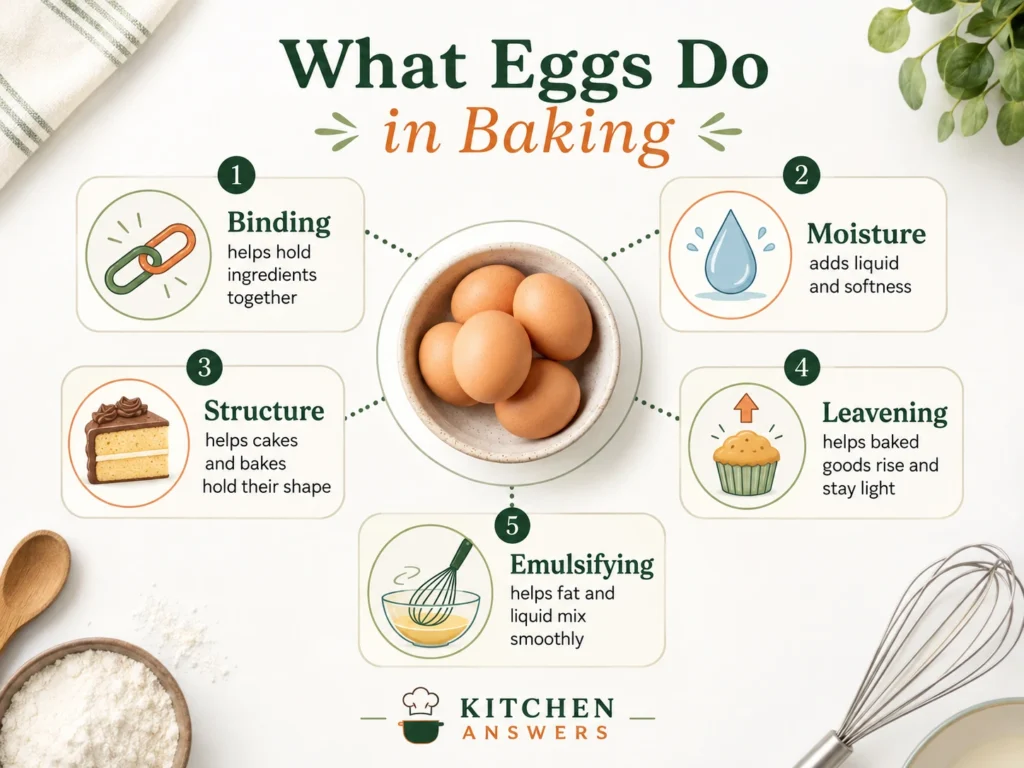
Eggs can bind ingredients, add moisture, provide structure, help with rise and keep fat and water mixed smoothly. Because they do several jobs at once, the best egg substitute for brownies may be very different from the best choice for a light cake.
The best egg substitutes for baking depend on the recipe, the number of eggs being replaced and which of those jobs matters most.
How to Choose the Best Egg Substitute for Baking
There is no single egg substitute for baking that wins every time. The right choice depends on whether the egg is mainly providing binding, moisture, structure or lift. These are useful starting points for common baking situations:
- Flaxseed + water – useful when binding matters, especially in cookies, muffins and quick breads.
- Unsweetened applesauce – adds moisture and some binding; often better for muffins, quick breads and softer bakes.
- Aquafaba – chickpea liquid that can replace a whole egg in some batters and can also foam when whipped.
- Plain yogurt – adds moisture, richness and some structure in suitable cakes, muffins and brownies.
- Mashed banana – adds moisture and binding, but also brings banana flavour.
- Chia seeds + water – forms a gel and works much like flax when binding is the main need.
- Sparkling water – can help lightness in some cakes, muffins and quick breads, but provides little binding or richness.
Find the best substitute for your recipe
For a tailored answer, use the Ingredient Substitute Finder. Select Eggs, tell it what you’re baking, how many eggs you need to replace, any dietary requirements and what you already have. It will narrow the choices and calculate the amount for you.
Ingredient Substitute Finder
Find the best substitute for your recipe based on what you're making, dietary needs, what you already have, and the units your recipe uses.
Match my recipe uses the same type of measurement as the ingredient amount you entered. Choose US or Metric if you want the substitute shown in a different measurement system.
Choosing an Egg Substitute for Baking: 7 Good Options
When choosing an egg substitute for baking, think about both the type of recipe and the job the egg needs to do. Here are seven useful options and where each one tends to work best.
1. Ground flaxseed + water
Often called a flax egg, this mixture is especially useful when the egg is mainly helping to hold ingredients together.
A common starting point for one large egg is 1 tablespoon ground flaxseed mixed with 3 tablespoons water. Let it sit for several minutes until it thickens before adding it to the batter.
Flax can work well in cookies, muffins, quick breads and other sturdier baked goods. It won’t create the same lift or delicate structure as a beaten egg, so it is less convincing in very light cakes.
2. Unsweetened applesauce
Applesauce is most useful when moisture and some binding matter more than aeration.
A common starting amount is 1/4 cup unsweetened applesauce for one large egg.
Because applesauce adds moisture without the same protein structure as an egg, the finished bake may be softer, denser or more cake-like. That can be a good trade in a muffin or quick bread, but it may be less welcome in a recipe where chew or crispness matters.
3. Aquafaba
Aquafaba is the liquid from canned chickpeas – the part many of us used to pour straight down the drain.
A practical starting point is about 1/4 cup (57 g) aquafaba for one whole egg in suitable recipes. It can also be whipped, which gives it an advantage over many other substitutes when air matters.
It is versatile, but not magical. Cakes and cookies that depend heavily on whipped eggs or egg whites for their structure can still fail if aquafaba is treated as a simple one-for-one solution.
4. Plain yogurt
Plain yogurt can add moisture, richness and some structure. About 1/4 cup is a common starting point for one egg in suitable recipes.
It can be particularly useful in moist cakes, muffins and brownies. It does not reproduce the aerating ability of a whipped egg, and regular dairy yogurt is not suitable for vegan or dairy-free baking.
5. Mashed banana
Mashed ripe banana adds moisture and helps bind ingredients. About 1/4 cup is a common starting amount for one egg.
The trade-off is flavour. Banana bread is unlikely to complain. A delicate vanilla cake may have stronger opinions.
6. Chia seeds + water
Chia forms a gel much like flax. A useful starting point is 1 tablespoon chia seeds mixed with 3 tablespoons water for one egg.
It is most useful when binding matters more than creating lots of lift. The seeds can also be more noticeable in the finished bake than a smoother substitute.
7. Sparkling water
Plain sparkling water or seltzer is one of the more surprising options. About 1/4 cup can replace one egg in some light cakes, muffins and quick breads.
The bubbles can help with lightness, but sparkling water contributes little binding, protein or richness. Think of it as a recipe-specific option, not a universal egg replacement.
What does an egg actually do in baking?
You don’t need a food-science degree to choose a substitute, but knowing the egg’s main job makes the decision much easier.
That’s why choosing the right egg substitute for baking starts with understanding whether your recipe needs binding, moisture, structure, leavening or emulsifying most.
Binding: Egg proteins help ingredients hold together as the bake sets. Flax and chia gels are useful when this is the main job.
Moisture: Eggs contain water, so applesauce, banana and yogurt can replace some of that moisture.
Structure: Egg proteins firm as they heat and help support cakes, muffins and bars. Moist replacements do not necessarily provide the same support.
Leavening: Beaten eggs can trap air, which expands during baking. This is especially important in light cakes and egg-heavy bakes.
Emulsifying: Egg yolks help fat and water stay mixed. This is one reason replacing an egg can change texture even when the batter still looks fine.
Choose the substitute by what you’re baking
Cake
Simple cakes using one or two eggs may adapt well to the right substitute, but cakes that rely heavily on eggs for structure and rise are much less forgiving.
For angel food, chiffon, sponge and other egg-dependent cakes, an established egg-free recipe is usually safer than trying to replace several eggs in the original.
Brownies
Brownies are usually more forgiving than delicate cakes, but the substitute can move them toward fudgy, cakey, wet or crumbly.
Yogurt and aquafaba can work well in some brownie recipes. Applesauce tends to add moisture. Flax may bind well in one brownie and disappoint in another. The style of brownie matters as much as the ingredient list.
Cookies
Cookies often need less lift than a sponge cake, so binders such as flax or chia can be useful. Applesauce can work in softer cookies but may make them more cake-like.
A sturdy oatmeal cookie and a meringue-style cookie are asking very different things from an egg, so a single answer for every cookie would be misleading.
Muffins and quick breads
These are often among the easier bakes to adapt because many recipes are simple stir-and-bake batters.
Applesauce, yogurt, aquafaba, banana, flax and sparkling water can all be useful depending on whether the recipe needs more binding, moisture or lightness.
Vegan egg substitutes for baking
Several useful egg replacements are naturally plant-based:
- Ground flaxseed + water
- Chia seeds + water
- Aquafaba
- Unsweetened applesauce
- Mashed banana
- Silken tofu
- Commercial vegan egg replacers
The best vegan option still depends on the recipe. Selecting Vegan in the Ingredient Substitute Finder removes unsuitable choices before it ranks the remaining options.
When you shouldn’t simply replace the eggs
Sometimes the most useful answer is to choose a recipe that was designed without eggs from the beginning.
Be especially cautious when eggs make up a large part of the recipe or provide most of its rise and structure. Angel food cake, chiffon cake, many sponge cakes, souffles and recipes built around whipped egg whites are poor candidates for a casual substitution.
The more eggs you’re trying to replace, the more likely the final result is to move away from the original. Replacing one egg in a muffin batter is a very different problem from replacing six eggs in an egg-dependent cake.
Which egg substitute should you use?
If binding is the main job, start with flax or chia. If moisture is more important, applesauce, banana or yogurt may fit. If you need a versatile plant-based option that can also foam, aquafaba is worth considering. If you are working with a light stir-and-bake batter, sparkling water may be an option.
And if you’re not sure what the egg is doing, use the Ingredient Substitute Finder instead of guessing. The recipe context matters more than finding one ingredient that claims to replace eggs everywhere.
Open the Ingredient Substitute Finder
Frequently Asked Questions
What can I use instead of one egg for baking?
Common starting options include a flax egg, 1/4 cup unsweetened applesauce, about 1/4 cup aquafaba, 1/4 cup plain yogurt, 1/4 cup mashed banana, chia gel or 1/4 cup sparkling water. The best choice depends on the recipe.
What is the best vegan egg substitute?
There is no single best vegan substitute for every bake. Flax and chia are useful binders, applesauce and banana add moisture, and aquafaba is especially versatile because it can also foam or whip.
Can I bake a cake without eggs?
Yes, many cakes can be made without eggs. Substitution is harder when eggs provide most of the cake’s structure or rise. For egg-dependent cakes, use a recipe developed to be egg-free.
Is applesauce or flaxseed better as an egg substitute?
It depends on the job. Applesauce contributes moisture and some binding, while flax gel is especially useful for binding. Neither replaces every function of an egg.
How much applesauce replaces one egg?
A common starting point is 1/4 cup unsweetened applesauce for one large egg in a suitable recipe.
How much flaxseed replaces one egg?
A common starting point is 1 tablespoon ground flaxseed mixed with 3 tablespoons water. Let it thicken for several minutes before using.