
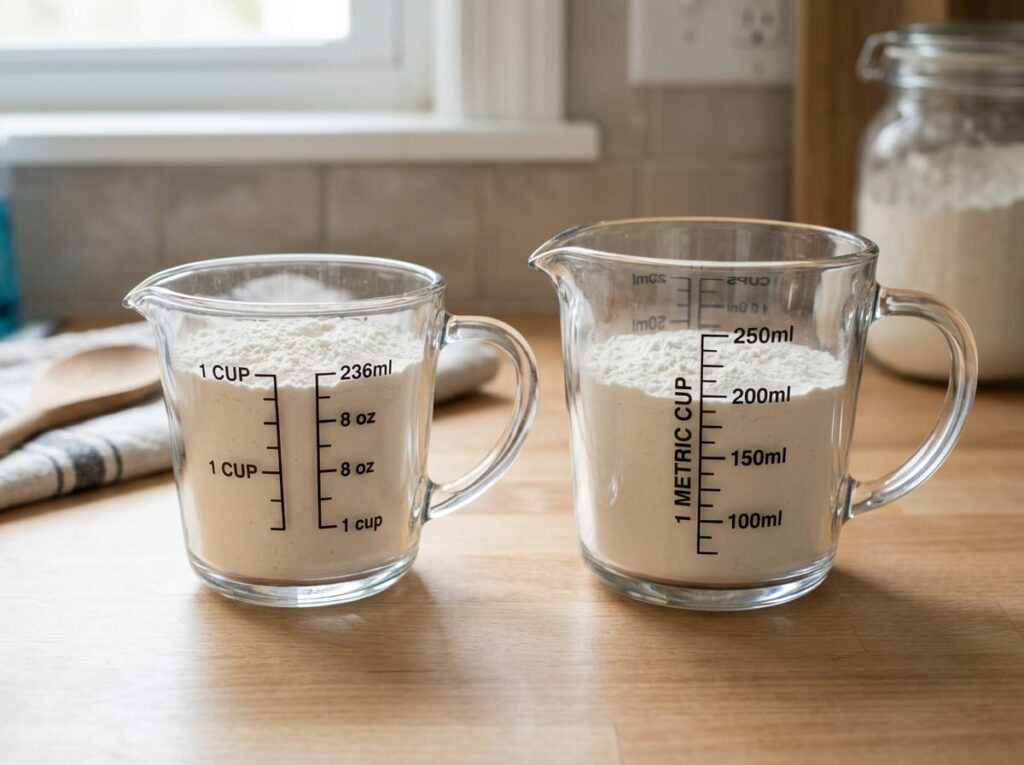
A US cup and a metric cup aren’t the same size. In the debate of US cups vs metric cups, a US cup is 236.6 to 240ml, while a metric cup (used in Australia, New Zealand, and Canada) is 250ml. That’s roughly a 4% difference—small enough to ignore for a cup of stock and large enough to matter in a small, precise bake.
Quick answer
| Cup | Volume | Used in |
|---|---|---|
| US “legal” cup | 240ml | What most US recipe writers mean by “1 cup” |
| US customary cup | 236.6ml | Exactly 8 US fluid ounces; close enough to the legal cup to ignore in practice |
| Metric cup | 250ml | Australia, New Zealand, Canada |
There isn’t a “UK cup” in any current sense. Modern British recipes are written in grams, and cup measures sold in the UK today are the 250ml metric size.
Does a 4% difference actually matter?
It depends what you’re making. For a cup of stock going into a soup, or a cup of chopped vegetables, 4% is well within the margin the dish can absorb without anyone noticing.
It matters more in a small, precisely balanced bake: a single-layer cake, a batch of macarons, anything where the ratio of flour to liquid to leavening is doing real structural work. Multiply that 4% across every cup measurement in a recipe with several of them, and the compounded error is enough to throw off texture, rise or how long something needs to bake.
The safest rule: if a recipe was written in one system, measure it in that same system rather than mixing US cups into a recipe written for Australian metric cups, or the reverse.
How do you tell which cup a recipe means?
Usually from where the recipe comes from. A US website, US cookbook or US food brand almost always means the 236.6–240ml US cup. An Australian, New Zealand or Canadian source generally means the 250ml metric cup. If the source isn’t obvious, other clues in the recipe can help: spelling (“colour,” “flavour”), oven temperatures given in Celsius with a gas mark, or tablespoon measurements can all point to which system it was written in.
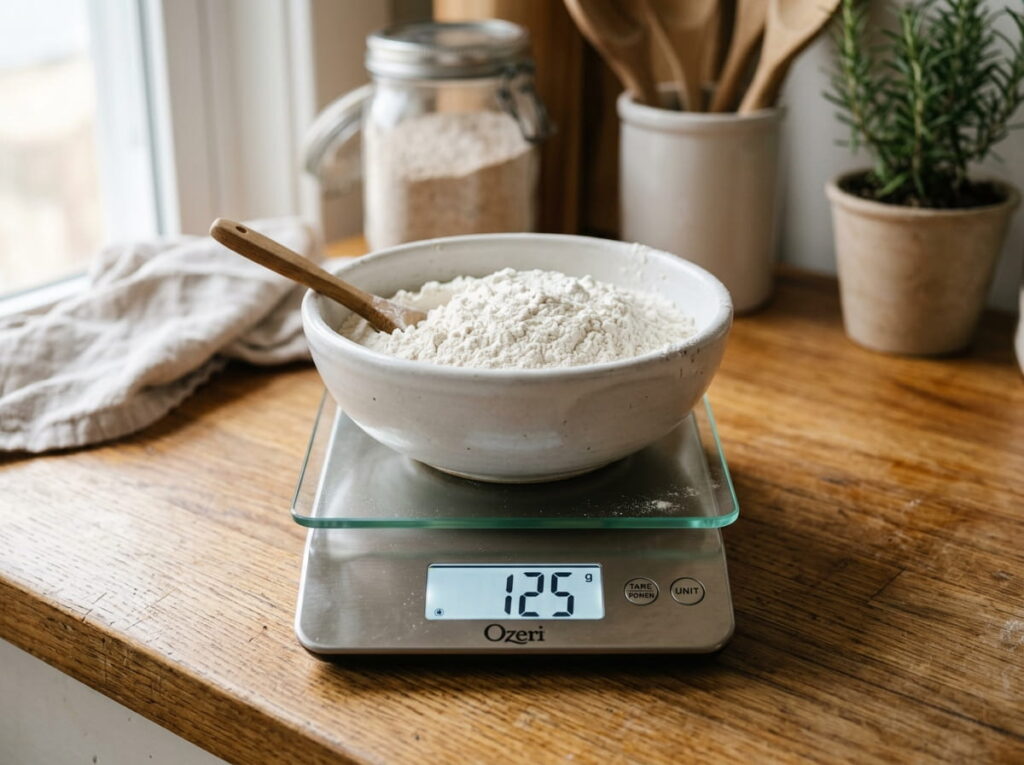
When in real doubt and the recipe matters (a layer cake for a birthday, not a forgiving weeknight soup), weighing the ingredients in grams sidesteps the whole cup-size question entirely.
Kitchen Answers Tip: If you own only one set of measuring cups, check which size they actually are. Some sets sold in the US are labeled by fraction (¼, ⅓, ½, 1 cup) without stating milliliters, and a mismatched or imported set can be the metric size without saying so.
What about tablespoons and teaspoons?
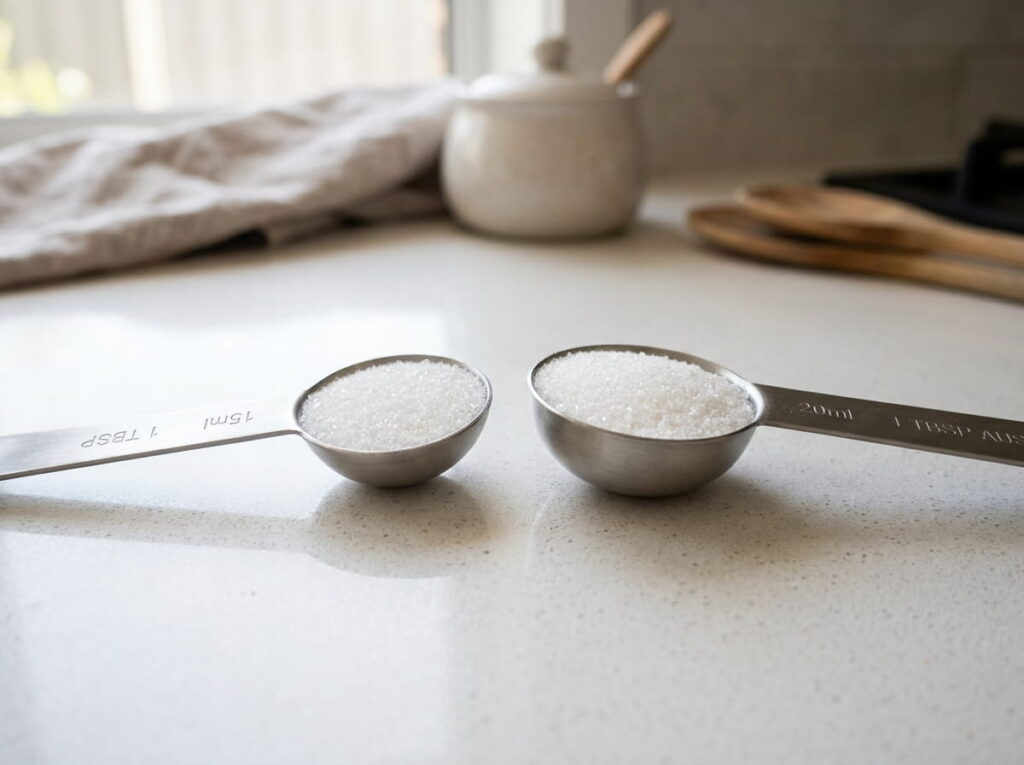
This is where the bigger trap actually is. A teaspoon is 5ml everywhere, but the tablespoon is not:
| Country | 1 tablespoon | Teaspoons per tablespoon |
|---|---|---|
| US, UK, New Zealand | 15ml | 3 |
| Australia | 20ml | 4 |
That’s a much bigger gap than the cup difference (33%, not 4%), and it catches people constantly, including within Australia itself: many measuring spoons sold there are the 15ml size even though Australian recipes are written for the 20ml tablespoon. For flour or sugar, a 5ml miss is trivial. For baking powder, bicarbonate of soda or yeast, it’s enough to visibly change how something rises.
Frequently asked questions
Are Australian and Canadian cups the same size?
Yes. Both Australia and Canada use the 250ml metric cup, along with New Zealand. It’s the US recipes using the smaller 236.6–240ml cup that stand apart from the rest.
Do liquid and dry cup measures differ by country?
In the US, dry and liquid measuring cups hold the same volume, but they’re shaped differently and meant to be filled differently: dry cups are meant to be leveled off flat, while liquid measuring cups have a spout and are read at eye level. Australian, Canadian and New Zealand metric cups follow the same 250ml volume for both.
Why do some US recipes use ounces instead of cups?
Ounces (by weight) are more precise than cups (by volume), especially for ingredients like flour that can pack differently depending on how they’re scooped. Recipes aimed at more precise baking, or written by cookbook authors who bake professionally, often give weight in ounces or grams alongside or instead of cup measurements.
Does a regular coffee cup count as a measuring cup?
No. Coffee cups and mugs vary widely in size and are not a reliable stand-in for a measuring cup. Even mugs marketed as “12 oz” or similar often hold a different amount to the rim than that number suggests.
Is a UK pint the same as a US pint?
No. A UK (imperial) pint is about 568ml, while a US pint is about 473ml, roughly 20% smaller. This trips people up with beer and cream measurements especially, since both countries use “pint” as a familiar unit.
How can you tell what size your own measuring cup set actually is?
Check the packaging or base of the cups for a printed ml or fl oz measurement. If that’s not available, fill the 1-cup measure with water and weigh it: 240g of water is a US cup, and 250g is a metric cup, since water weighs almost exactly 1 gram per milliliter.
Kitchen Measurement Converter
Converting between US and metric measurements for a specific recipe?