
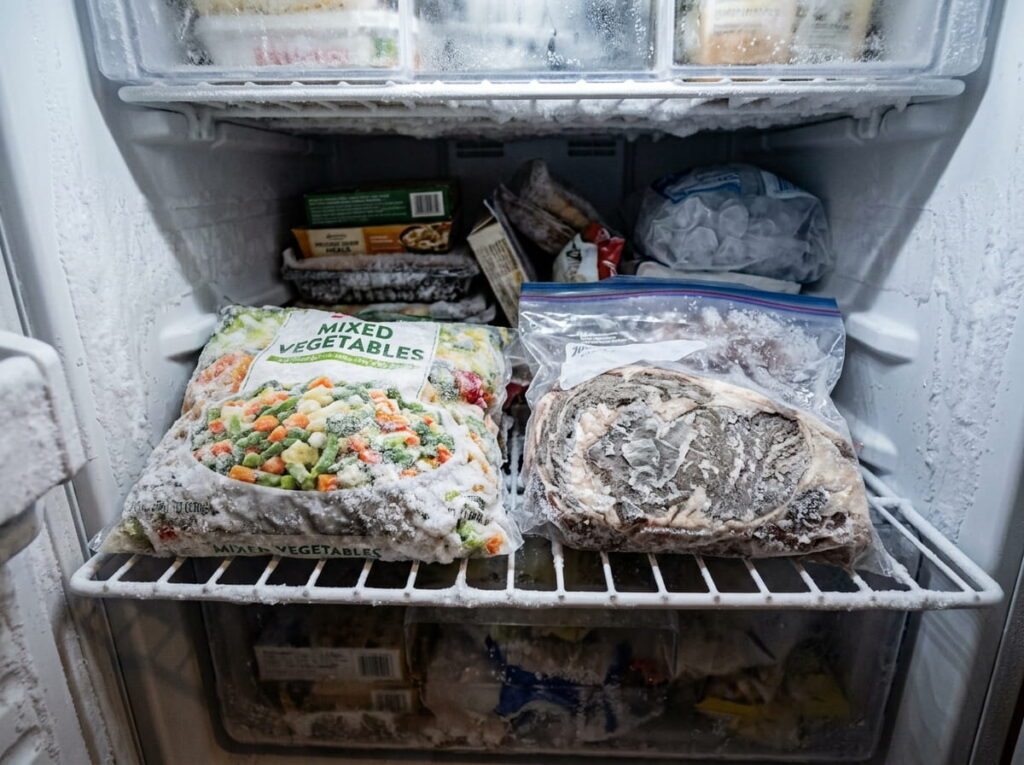
Yes, freezer-burned food is safe to eat. Freezer burn is a quality problem, not a safety one. It happens when air reaches the surface of frozen food and dries it out, and while it can leave food tough, dry or bland in spots, it doesn’t make food unsafe.
Quick answer
- Safe to eat: yes, as long as the food stayed frozen the whole time
- What causes it: air exposure drying out the food’s surface (a form of dehydration, not spoilage)
- What to do about it: trim the affected part for best taste and texture, or use it in a dish where texture matters less
- How to prevent it: airtight packaging, air pressed out, freezer set to 0F (-18C) or colder
What actually causes freezer burn?
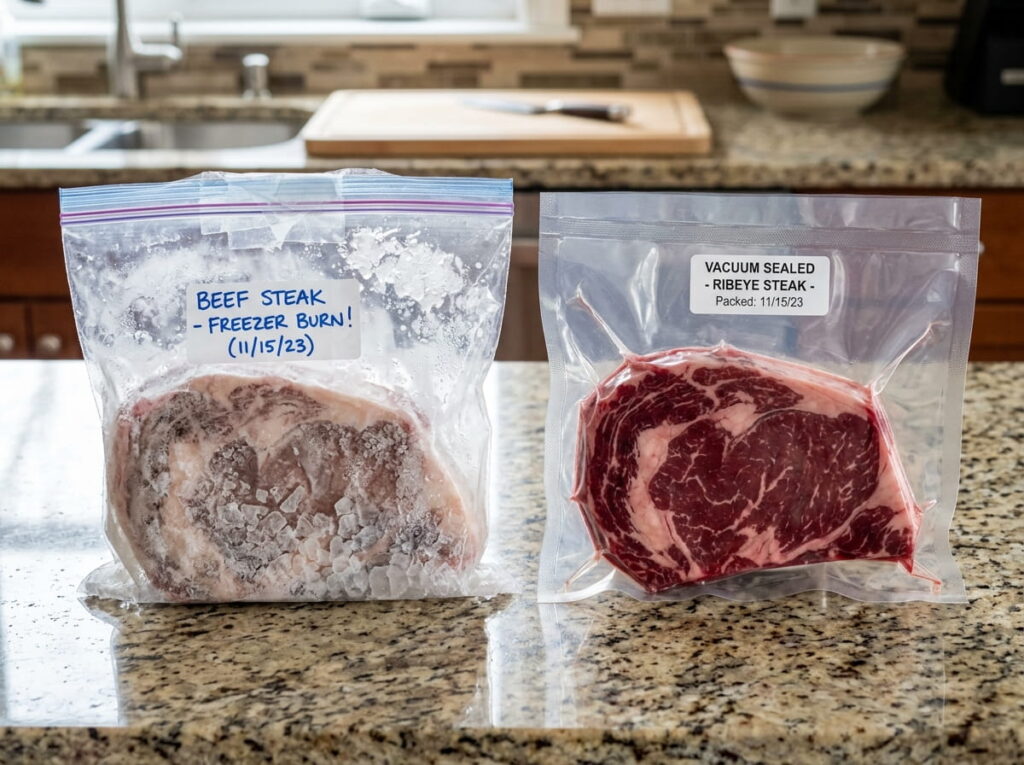
Freezer burn happens when the surface of frozen food loses moisture to the surrounding air: the ice inside the food sublimates (goes straight from solid to vapor) and escapes through gaps in the packaging or from food that isn’t wrapped tightly enough. That moisture loss leaves greyish-brown, leathery or dry-looking patches, usually on whatever part was closest to air.
It’s essentially freezer-induced dehydration. Nothing about the process introduces bacteria or makes the food spoil; it changes texture and, to a lesser extent, flavor, in the affected spots.
Why doesn’t freezer burn make food unsafe?
Food kept continuously frozen at 0F (-18C) or below is safe indefinitely, according to USDA guidance, because freezing halts the growth of the bacteria that cause foodborne illness. Freezer burn doesn’t change that: it’s a physical drying process, not bacterial growth, so the food underneath the affected surface is exactly as safe as it was the day it went into the freezer.
The one thing that does compromise safety is if food actually thawed and refroze, or sat above freezing temperature for an extended period at some point. That’s a different problem from freezer burn, and it’s worth being able to tell the two apart.
What should you do with freezer-burned food?
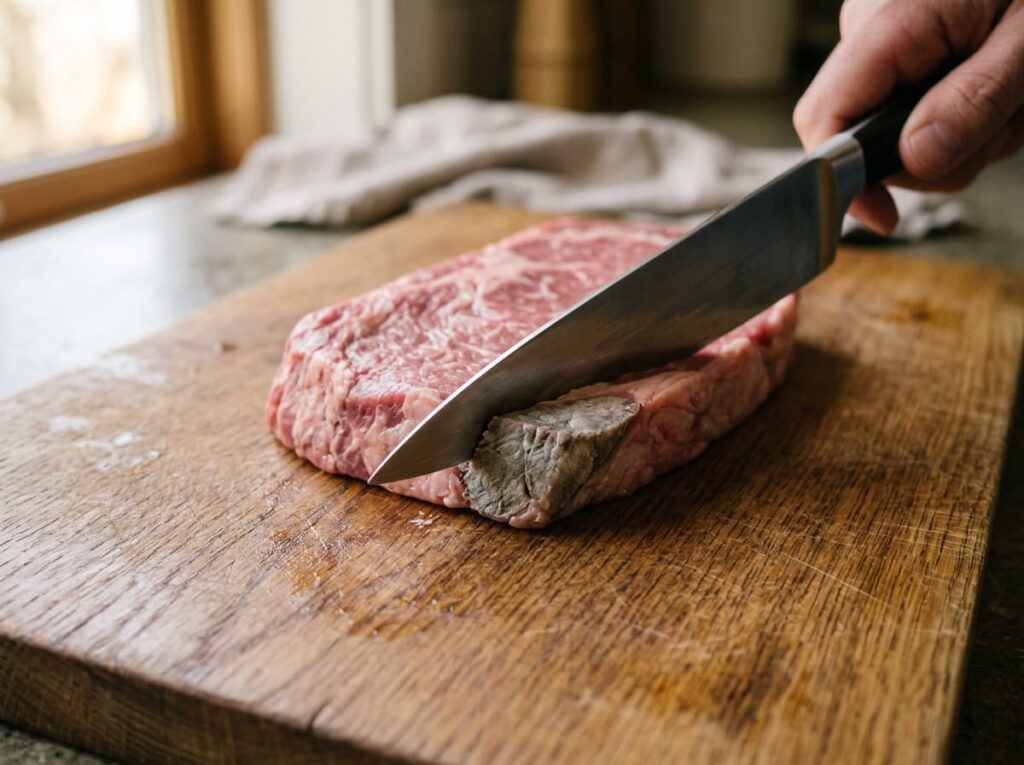
For the best taste and texture, USDA guidance recommends cutting away the freezer-burned portion (either before or after cooking) and using the rest normally. For heavily freezer-burned food, or if you’d rather not deal with trimming, it’s still perfectly fine to cook and eat the whole thing; it just may taste flatter or feel drier or tougher in spots than food that was well protected.
Freezer-burned food tends to do best in dishes where texture is disguised by the cooking method: soups, stews, sauces, ground meat in chili, smoothies for freezer-burned fruit. It’s a poorer fit for dishes where it’s the star and needs to be tender or juicy on its own, like a grilled steak or a plain roasted vegetable.
Kitchen Answers Tip: If you’re ever unsure whether something is freezer-burned or actually spoiled, freezer burn stays dry, leathery and pale where the air got to it. Spoilage in previously frozen food usually shows up as an off smell after thawing, not as a dry patch. Trust your nose over the appearance.
How do you prevent freezer burn in the first place?
- Press out as much air as possible before sealing a freezer bag, or use a vacuum sealer for anything you plan to store long-term.
- Use freezer-rated packaging rather than the thinner bags or wrap meant for the fridge or pantry, since they’re more resistant to air and moisture transfer.
- Rewrap store packaging that isn’t airtight, especially meat trays wrapped in thin plastic film. An opened package is at more risk than an unopened one, since breaking the original seal gives air a way in even if you fold the wrapping back over.
- Keep your freezer at 0F (-18C) or colder and as consistent as possible. A freezer that fluctuates in temperature (from a door left open, or overpacking) speeds up moisture migration.
- Use food within a reasonable window even though it stays safe longer. Quality genuinely does decline over months, freezer burn or not.
Does freezer burn look different on different foods?
Yes. On meat, it usually shows as greyish-brown or whitish dry patches. On vegetables, it can look like ice crystals or a shrivelled, frosted surface. On baked goods and bread, it tends to show up as a dry, slightly stale texture rather than visible discoloration. In all cases, the underlying cause and the safety verdict are the same.
Frequently asked questions
Is freezer-burned ice cream safe to eat?
Yes. The icy, grainy layer that forms on freezer-burned ice cream is from moisture moving and refreezing, not from spoilage. It’s safe, though the texture and flavor suffer, so it’s usually best scraped off and the rest eaten, or the whole batch used in a milkshake where texture matters less.
Does freezer burn permanently affect flavor once food is thawed?
The dried-out, freezer-burned portion doesn’t recover its original texture or flavor after thawing. Trimming that portion away before cooking is what fixes it, rather than any amount of thawing or resting.
Is freezer-burned fish safe to eat?
Yes, the same rule applies to fish as to meat and vegetables: freezer burn is a texture and flavor issue, not a safety issue, as long as the fish stayed frozen the whole time. Fish tends to show freezer burn more visibly and lose more texture than heartier cuts of meat, so trimming and using it in a dish like chowder or fish cakes works better than serving it plain.
How long does it take for freezer burn to start?
There’s no fixed timeline — it depends on how well the food is wrapped and how much air reached the surface. Poorly wrapped food can show freezer burn within a few weeks, while well-sealed, airtight packaging can hold off freezer burn for many months.
Does vacuum sealing completely prevent freezer burn?
It gets much closer to preventing it than a standard freezer bag, since it removes nearly all the air around the food, but it isn’t a total guarantee over a very long storage time. A puncture in the seal or air pockets that weren’t fully removed can still let some freezer burn develop.
Can freezer burn happen in a frost-free freezer?
Yes, and in some cases more easily. Frost-free freezers work by periodically warming slightly to clear frost buildup, which actually promotes the moisture cycling that causes freezer burn in improperly sealed food. Airtight packaging matters just as much, if not more, in a frost-free model.
Food Storage Time Finder
Want to check how long a specific food actually keeps in the freezer?