
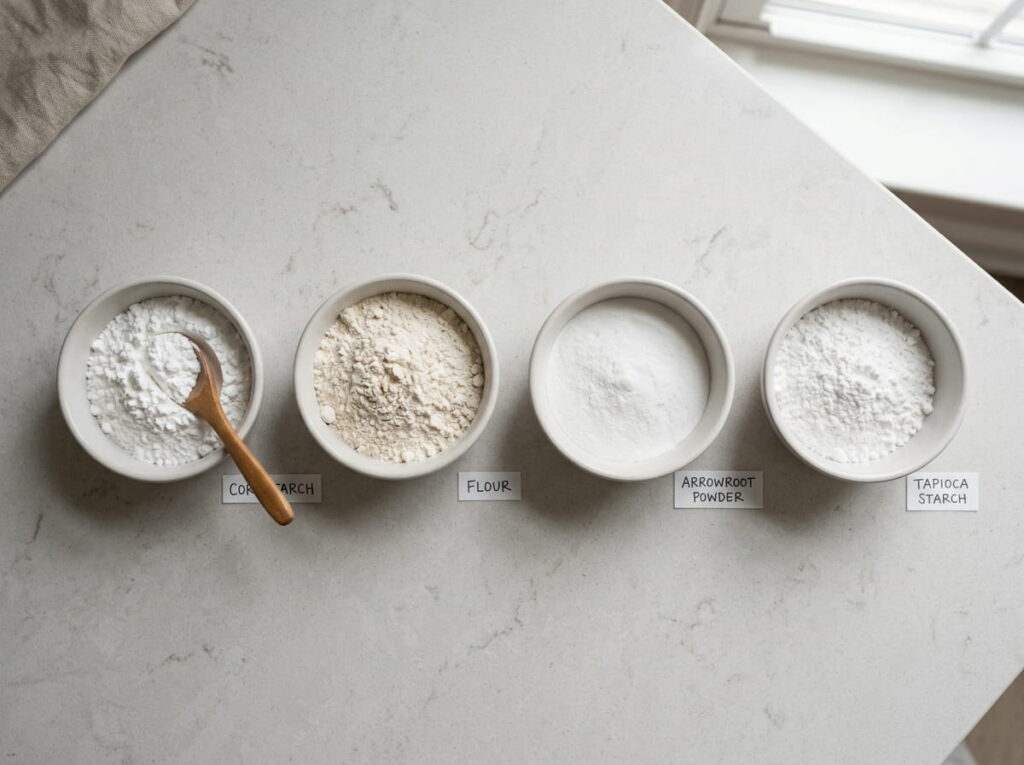
If you need a cornstarch substitute for thickening a sauce or gravy, the best choices are all-purpose flour, a beurre manie of butter and flour, or another starch like arrowroot, tapioca or potato starch. Which one to reach for depends on whether the sauce needs to stay clear, whether it’s acidic or dairy-based, and how long it still needs to cook.
Quick answer
To replace 1 tablespoon of cornstarch (enough to lightly thicken about 1 cup of liquid), use:
- 2 tablespoons all-purpose flour, cooked into a roux or whisked into a slurry (the most common pantry swap)
- 2 teaspoons arrowroot starch for a clear, glossy finish, especially in acidic or dairy sauces
- 4 teaspoons tapioca starch for a clear sauce that holds up well to freezing
- 1 tablespoon potato starch, added at the end off the heat
- 1 tablespoon rice flour, mixed with cold liquid first
- A beurre manie: 1 tablespoon each softened butter and flour, kneaded together and whisked in at the end
None of these behave exactly like cornstarch. Flour clouds a sauce and needs longer cooking to lose its raw taste; the other starches thicken fast and clear but break down if boiled hard or reheated too many times.
In metric terms, 1 tablespoon is about 15ml and 1 teaspoon is about 5ml, so the amounts above convert directly if you’re measuring by volume. If you’re gluten-free, skip the flour and beurre manie options: arrowroot, tapioca starch, potato starch and rice flour are all naturally gluten-free.
Cornstarch substitute comparison
| Substitute | Amount for 1 tbsp cornstarch | Best for | What changes |
|---|---|---|---|
| All-purpose flour | 2 tbsp | Gravy, stews, pan sauces | Cloudier, needs a few minutes of simmering to cook out the raw taste |
| Arrowroot | 2 tsp | Fruit sauces, acidic or dairy-based sauces | Clear and glossy; breaks down if boiled after adding |
| Tapioca starch | 4 tsp | Pie fillings, sauces you plan to freeze | Clear finish; can turn slightly gummy if overused |
| Potato starch | 1 tbsp | Sauces finished off the heat | Loses thickening power if boiled after adding |
| Rice flour | 1 tbsp | Asian-style sauces and soups | Slightly grainy unless fully dissolved first |
| Beurre manie | 1 tbsp butter + 1 tbsp flour | Finishing a thin pan sauce at the last minute | Adds richness along with thickness |
| Reduction (no starch) | Simmer longer instead | Sauces where a stronger flavor is welcome | Concentrates flavor and salt, not just thickness |
Can you use flour instead of cornstarch?
Yes, and it’s the most common swap because most kitchens already have it. Use twice as much flour as cornstarch, since flour has about half the thickening power, tablespoon for tablespoon.
Flour needs to actually cook, not just dissolve. Either make a roux first (melt butter, whisk in the flour, cook 1 to 2 minutes before adding liquid), or whisk the flour into a small amount of cold liquid to make a lump-free slurry, then stir it into the simmering sauce and let it cook a few minutes more. Skipping that cooking time is the most common reason a flour-thickened gravy tastes raw or pasty.
Flour also makes a sauce more opaque than cornstarch does, which matters for a clear glaze or fruit sauce but is a non-issue for gravy.
What is a beurre manie, and when should you use one?
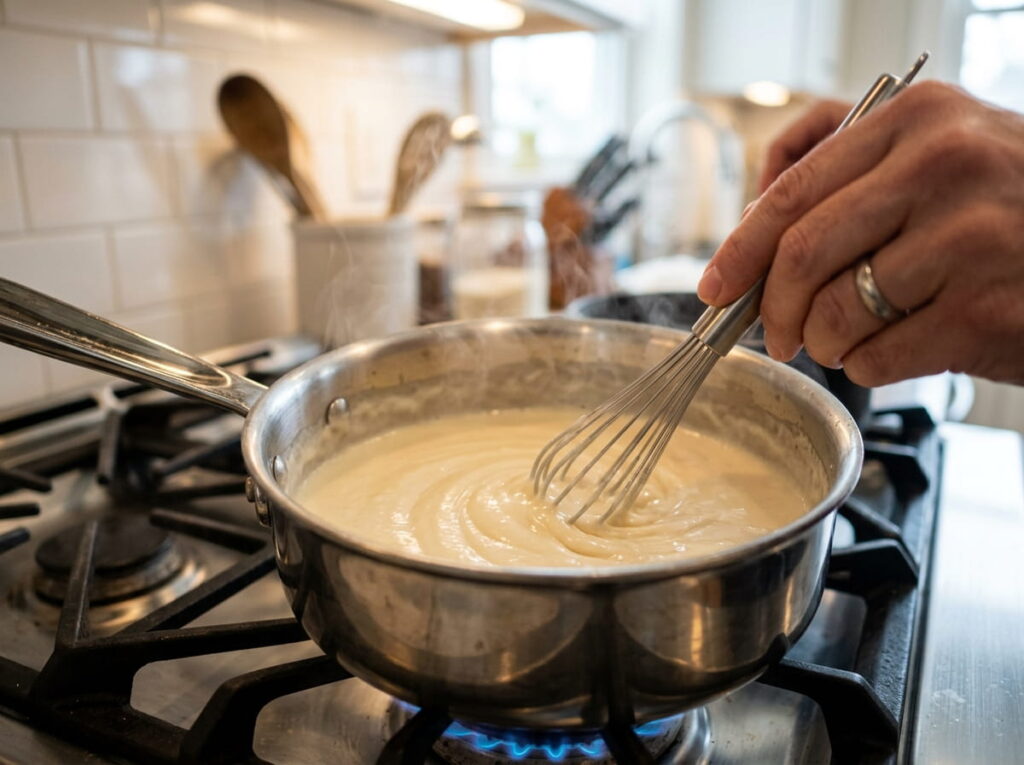
A beurre manie (“kneaded butter”) is equal parts softened butter and flour, worked together into a paste with your fingers or a fork. Whisked into a simmering sauce at the very end, it thickens quickly without the raw-flour taste a straight slurry can leave.
It’s the right tool when a pan sauce is nearly done and needs body fast: deglazed pan sauces, stews finishing on the stove, gravy that’s thinner than you’d like a few minutes before serving. Add it in small pieces, whisking constantly, and let the sauce simmer for a couple of minutes after each addition before deciding whether it needs more.
Kitchen Answers Tip: Any starch slurry (cornstarch, flour, arrowroot or otherwise) should be mixed with cold liquid before it goes anywhere near heat. Adding dry starch straight to a hot pan almost always leaves lumps.
Which substitute holds up best to reheating or freezing?
Tapioca starch is the most freezer-stable of the common cornstarch substitutes, which is why it shows up often in pie fillings meant to be frozen. Cornstarch and potato starch both lose thickening power and can turn watery after freezing and thawing. Flour holds up reasonably well to reheating but not to freezing; the sauce tends to separate.
If a sauce needs to survive the freezer, tapioca or a beurre manie added fresh after reheating are the more reliable choices.
Do you need a different substitute for an acidic or dairy sauce?
Sometimes. Cornstarch itself can break down and lose thickening power in strongly acidic sauces (citrus, wine, vinegar-based glazes) if boiled too long. Arrowroot tolerates acid and dairy better and produces a clearer result, which is why it’s often preferred for fruit sauces and delicate cream sauces. The tradeoff is that arrowroot itself breaks down if the sauce boils hard after it’s added, so stir it in and keep the heat gentle from that point on.
Which substitutes don’t work well?
- Baking powder or baking soda: these are leaveners, not thickeners: they won’t add body and can leave an off flavor.
- Instant mashed potato flakes: can thicken in a pinch but bring a strong potato flavor that works for very few sauces.
- Raw flour stirred in at the last second: without cooking, it leaves a pasty texture and a raw taste no amount of seasoning fixes.
- Gelatin: sets a sauce as it cools rather than thickening it while hot: different job, different result.

Frequently asked questions
Can you substitute cornstarch and flour 1:1?
No. Flour has roughly half the thickening power of cornstarch, so you need about twice as much flour to get the same result. Swapping in flour at a 1:1 ratio will leave a sauce noticeably thinner than intended.
Is cornstarch or arrowroot better for a pie filling?
Both work, but they behave differently once the pie cools. Cornstarch sets into a firmer, more sliceable filling, while arrowroot stays a little softer and glossier. For a fruit pie you plan to freeze, tapioca starch is usually the more reliable choice of the three since it holds up better through freezing and thawing.
Can baking soda be used to thicken a sauce?
No. Baking soda is a leavener, not a thickener. It won’t add body to a sauce, and using it in place of a starch can leave a soapy or bitter aftertaste.
What do you do if a sauce turns out too thick after adding a substitute?
Thin it out gradually with a splash of warm water, stock or milk, depending on the sauce, stirring it in over low heat rather than all at once. It’s easier to loosen a sauce that’s too thick than to fix one that’s too thin.
Is there a good low-carb cornstarch substitute?
Xanthan gum is the most common low-carb option: use it in very small amounts (about ¼ teaspoon per cup of liquid) since a little goes a long way, and whisk it in slowly to avoid clumping. Glucomannan is another low-carb thickener some cooks use, though it’s less widely stocked.
Can you combine arrowroot and cornstarch in the same recipe?
Yes, there’s no issue mixing them if a recipe happens to call for both, or if you’re topping up a cornstarch-thickened sauce with a bit of arrowroot slurry. Just keep the heat gentle after adding the arrowroot portion, since it breaks down if the sauce boils hard afterward.
Ingredient Substitute Finder
Not sure which option suits the sauce you’re making?