
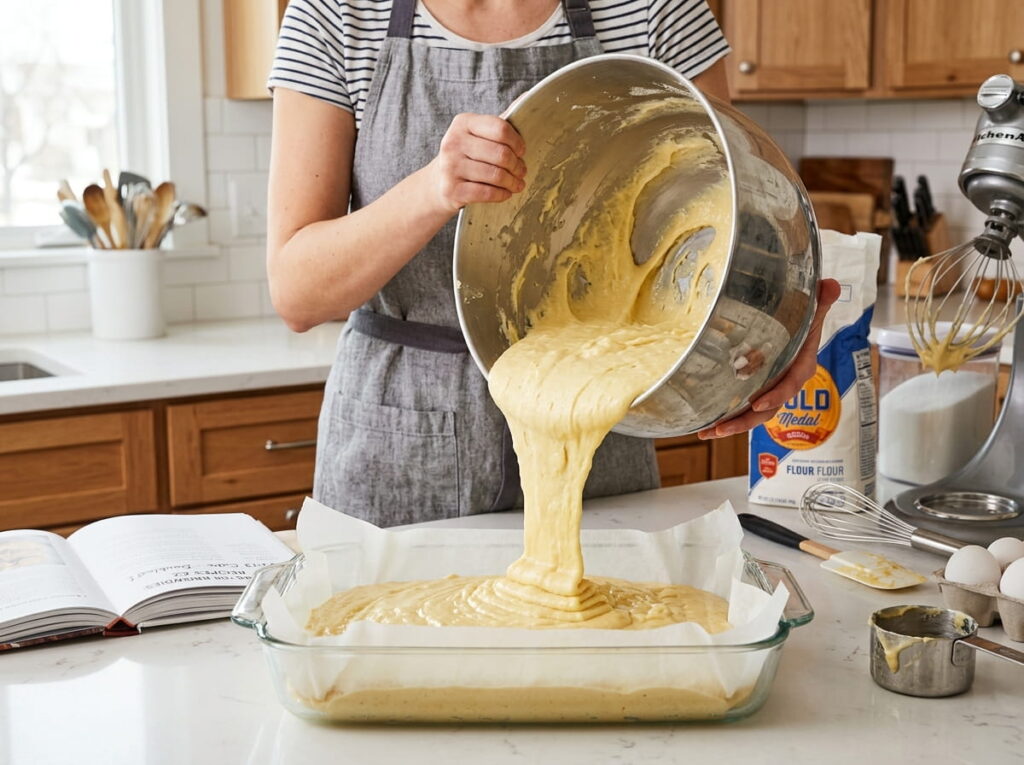
Doubling a recipe isn’t as simple as doubling every number. Flour, sugar, fat and liquid scale up cleanly if you work by weight. Baking time, pan size, batter depth, evaporation and anything cooked in liquid don’t, and those are exactly the places a “just double it” recipe tends to go wrong.
Quick answer: what scales, what doesn’t
| Scales linearly | Doesn’t scale linearly |
|---|---|
| Flour, sugar, fat, liquid (by weight) | Baking time (can take far less than double) |
| Individual items (cookies, muffins): just make more | Pan size (must match by area, not by name) |
| Most spices and herbs, to taste | Batter depth in a taller pan |
| Evaporation in soups, stews and sauces | |
| Liquid for rice and other grains |
Why doesn’t baking time double?
Because heat has to travel through the batter from the outside in, and how long that takes depends on depth and pan surface area, not on the total amount of batter. Doubling a cake recipe into a proportionally larger pan often adds only 10 to 30% more time, not 100% more. Doubling it into the same size pan, making the batter much deeper, can add considerably more time than that, and risks an underbaked centre with an overbaked edge.
Either way, treat the original time as a starting point to check from, not a number to double.
What pan should you use to double a recipe?
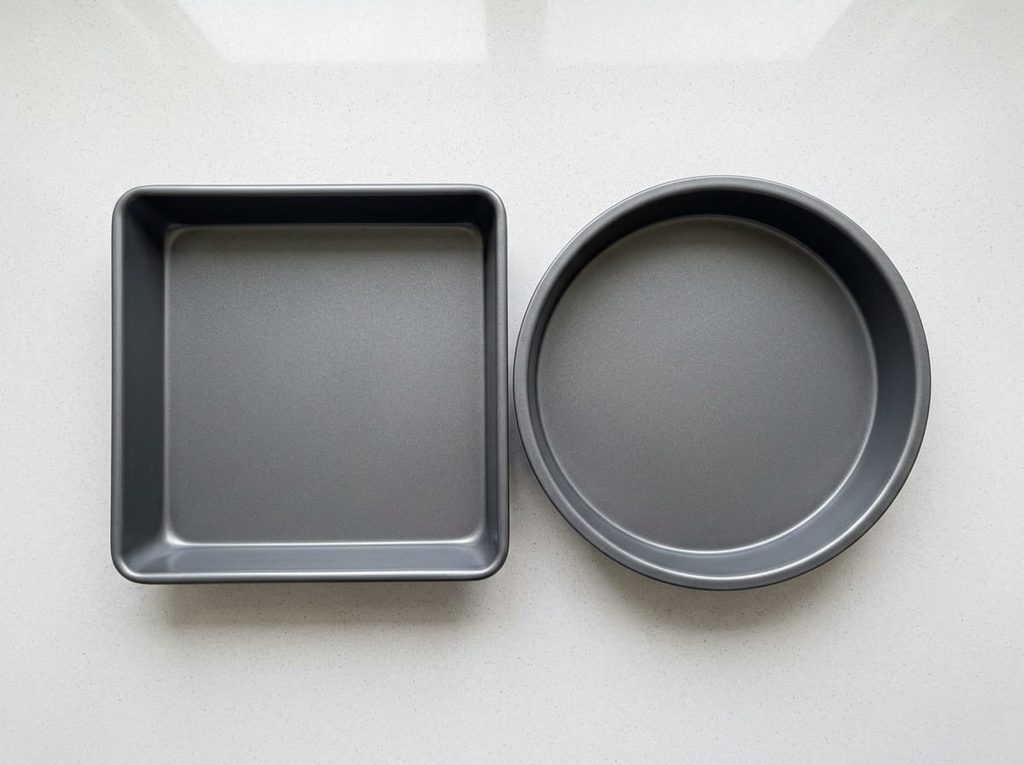
Scale by the pan’s bottom area, not its name. An 8-inch square pan and a 9-inch round pan are both about 64 square inches, genuinely interchangeable. A 9×13 pan is about 117 square inches, close to double either of those, which is why “double a recipe from an 8-inch pan into a 9×13” is such a common and reasonably reliable move.
What doesn’t work as well is doubling a recipe but keeping the same pan: the batter simply gets much deeper, and depth is the one dimension that most directly slows down baking.
Does a doubled Bundt or layered bake behave differently?
Yes. Even at the same pan area, a deeper vessel bakes differently than a shallow one holding the same volume. The same amount of batter takes roughly 30% longer in a 10-cup Bundt pan than it would spread across a 9×13. If you’re doubling into a deep pan rather than a wider one, budget noticeably more time and check doneness carefully in the centre.
Kitchen Answers Tip: When in doubt, bake a doubled recipe as two separate batches in the original pan size rather than one large batch in an unfamiliar pan. It takes longer overall, but the result matches the original recipe far more reliably.
Why does a doubled soup or stew need a wider pot?
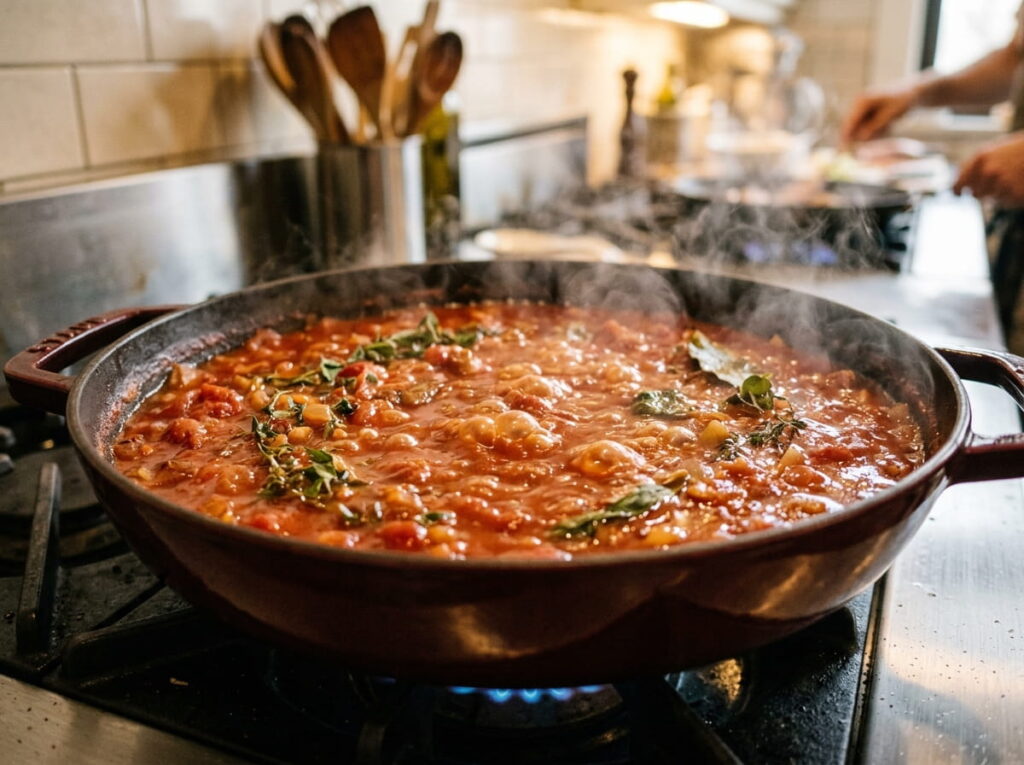
Double a stew and you have twice the liquid, but if you keep the same pot, the exposed surface area doesn’t double along with it, so it won’t reduce and thicken the way the original recipe expects in the same amount of time. Either use a wider pot so the ratio of surface area to volume stays closer to the original, or plan on cooking it uncovered for longer to get the reduction you’re expecting.
What about doubled rice or grains?
Don’t assume the cooking liquid doubles as cleanly as the grain does. Evaporation, pot size and cooking method all affect how much liquid a larger batch actually needs, so a doubled batch of rice may need slightly less liquid proportionally than a straight doubling would suggest. Follow the standard ratio and method for that specific grain rather than just doubling the original recipe’s liquid figure.
Do spices and seasoning need to double too?
Taste and adjust rather than doubling blindly. Salt, chili heat and strong spices don’t always need to double at the same rate as the bulk ingredients. Some cooks scale them down slightly on a double batch, though there’s no single verified rule for exactly how much less. Add most of the doubled amount, taste partway through cooking, and adjust from there rather than committing to a fixed multiplier upfront.
Frequently asked questions
Does doubling a yeast recipe work the same way as doubling other baked goods?
Mostly, but rise time can behave a little differently. Doubling the flour, liquid and yeast together generally works fine, though a much larger mass of dough can take slightly longer to rise all the way through, especially in a cool kitchen. Watch the dough itself rather than the clock.
Do eggs double exactly when you double a recipe?
Usually, yes, since eggs come in fixed sizes rather than a scalable measurement. If the original recipe calls for an odd number, like 3 eggs, doubling to 6 is straightforward. Where it gets trickier is a recipe that calls for a fraction of an egg; in that case, whisk an egg and measure out double the fractional amount by volume instead of guessing.
Should you split a doubled batter into two pans instead of one large one?
Often, yes, especially for cakes and quick breads. Two pans matching the original recipe’s size will bake closer to the original time and texture than one large pan with much deeper batter. It’s the more reliable option when you want the doubled batch to taste like the original rather than a denser version of it.
Do you need to change the oven temperature when doubling a recipe?
Usually not. Oven temperature is generally kept the same; it’s the baking time that needs adjusting, not the heat. An exception is a very deep or dense doubled batch, where a slightly lower temperature and longer time can help the center cook through without over-browning the outside.
Can you keep scaling up a recipe past double, like tripling or quadrupling it?
The same principles apply, but the effects get more pronounced. Pan size, batter depth, evaporation and liquid ratios all matter more as the batch grows, so it’s worth scaling in stages (testing a doubled batch before jumping straight to quadruple) rather than assuming a simple multiplier carries all the way through.
Does resting or chilling time change when you double a recipe?
It can. A larger volume of dough or batter takes longer to chill through in the fridge, since cold has to travel further to reach the center. If a recipe calls for chilling dough before baking, budget extra time for a doubled batch rather than chilling it for the original recipe’s stated time.
Recipe Scaling Calculator
Want the ingredient math done for you?