
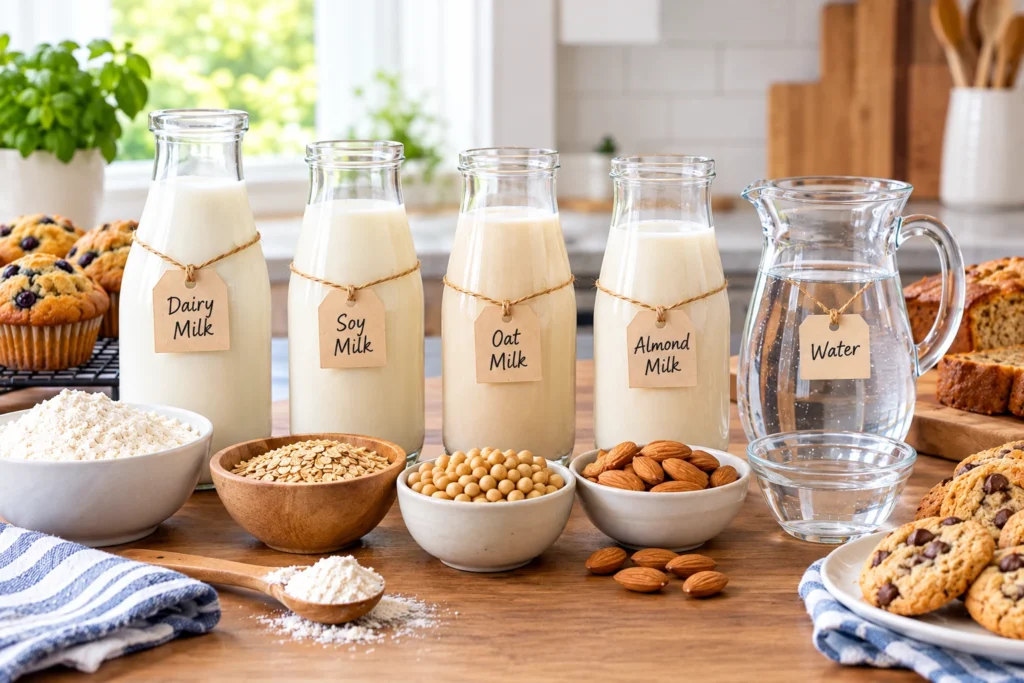
If you need a milk substitute for baking, plain unsweetened plant milk is usually the easiest answer. For most cakes, muffins and quick breads, use the same amount of soy, oat or almond milk as the dairy milk in the recipe. Soy milk is the closest all-around match to dairy milk, especially when protein and structure matter. Oat milk is another very useful everyday choice, while almond milk works well in many forgiving bakes.
If you have no milk of any kind, water can save some recipes, but it is an emergency substitute rather than an equal replacement. Milk contributes more than moisture. Its protein, fat and natural sugar can affect tenderness, flavour, structure and browning.
The best choice depends on what you are baking. A muffin is much more forgiving than a custard, and a tablespoon of milk in cookie dough matters far less than several cups of milk in a cream filling.
Quick Guide: What Can I Use Instead of Milk?
| Substitute | Amount for 1 cup milk | Best for | What to expect |
| Unsweetened soy milk | 1 cup | Cakes, muffins, breads, custards | Closest all-around plant-based match |
| Unsweetened oat milk | 1 cup | Cakes, muffins, quick breads | Mild flavour and good everyday performance |
| Unsweetened almond milk | 1 cup | Cakes, muffins, cookies | Usually works well; thinner and lower in protein |
| Other dairy milk | 1 cup | Most baking | Usually the simplest dairy swap |
| Evaporated milk + water | Dilute according to package; commonly equal parts for a milk-like strength | Cakes, muffins, breads | Slight cooked or caramelized flavour may remain |
| Reconstituted powdered milk | 1 cup prepared milk | Most baking | Very close pantry substitute |
| Water | 1 cup | Emergency use in forgiving recipes | Less richness, flavour and browning |
For plant milks, choose plain and unsweetened unless the recipe specifically benefits from another flavour. Vanilla-flavoured or sweetened milk can add unwanted sweetness or change the flavour of a delicate cake.
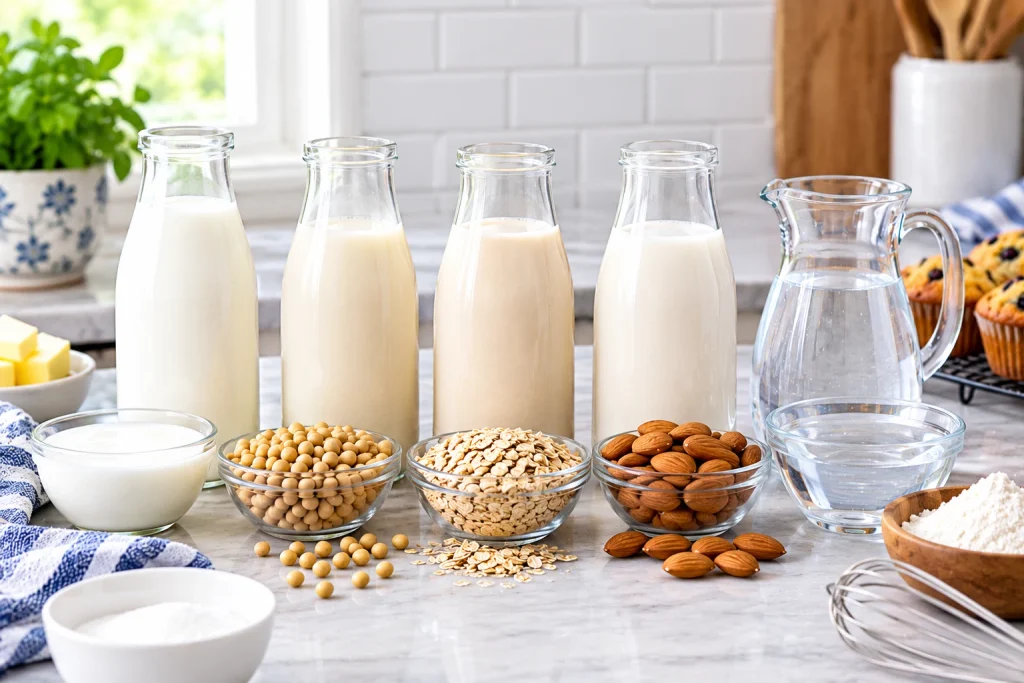
1. Soy Milk: Best Overall Dairy-Free Substitute
If you want one dairy-free milk that can handle the widest range of baking jobs, soy milk is the strongest choice. It can usually replace dairy milk 1:1.
The reason is not simply that soy milk looks like milk. Dairy milk contains protein, fat and sugar as well as water, and those components can influence a baked good. Soy milk stands out among common plant milks because its protein level is much closer to cow’s milk than most almond, oat, coconut or cashew beverages.
That difference becomes more important in recipes where milk is doing structural work. In comparative baking tests by King Arthur Baking, soy produced yeast bread closest to the dairy version and was also the strongest non-dairy performer in custard and pastry cream.
For ordinary cakes and muffins, however, you may not notice much difference between soy and several other plant milks. That is useful news if soy is not something you normally keep in the refrigerator.
Best for: yeast breads, cakes, muffins, quick breads and recipes where you want the most versatile dairy-free option.
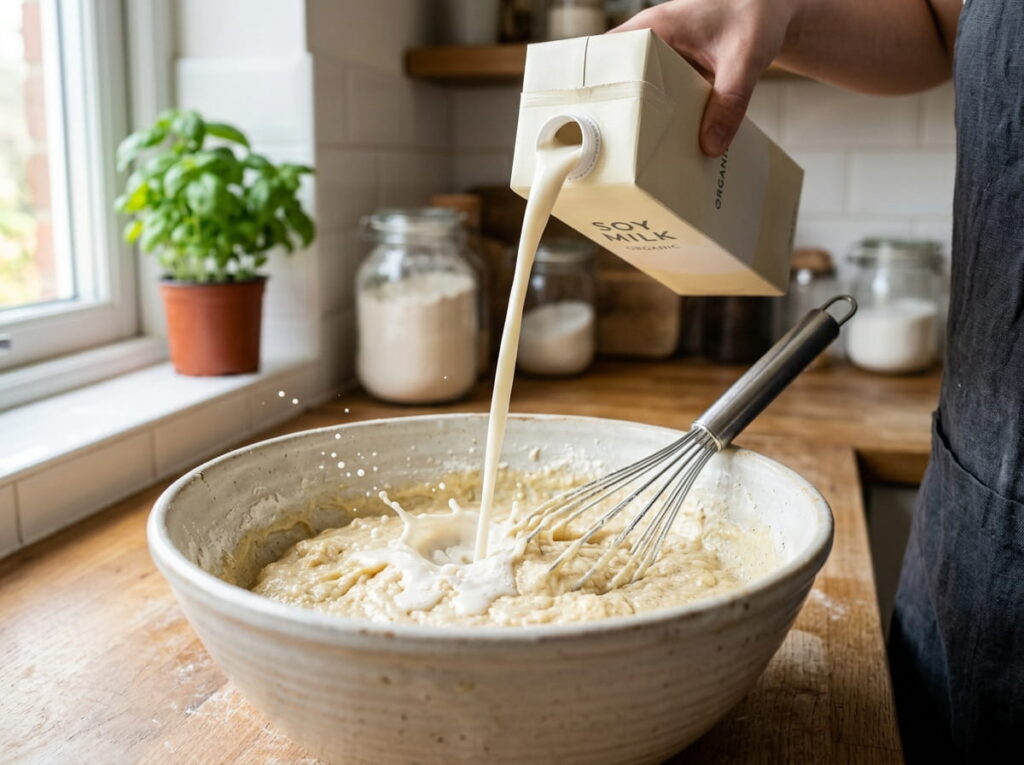
2. Oat Milk: Best Everyday Alternative
Oat milk is an easy substitute for regular milk in most everyday baking. Use it 1:1 and choose an unsweetened, unflavoured variety.
It works especially well in cakes, muffins, pancakes and quick breads, where small differences in protein are less likely to matter. In King Arthur’s side-by-side cake testing, oat milk performed similarly to dairy milk in rise, mouthfeel and flavour, although the oat-milk cake browned a little more.
Oat milk is also worth remembering when a recipe contains a lot of milk but is not a true custard. In custard-style recipes, soy is the safer first choice, with oat milk a reasonable second option.
Best for: muffins, cakes, quick breads, pancakes and general baking.
3. Almond Milk: A Good Lighter Substitute
Unsweetened almond milk can also replace regular milk 1:1 in many baked goods. It is thinner and much lower in protein than dairy or soy milk, but cakes and muffins are often forgiving enough that this does not cause a problem.
The biggest consideration is the recipe. A small amount of almond milk in cookie dough or a basic muffin batter is unlikely to be dramatic. A milk-heavy custard is a different story. Comparative testing found almond milk could fail to thicken properly in custard and pastry cream.
If nuts are an allergy concern, of course, almond milk is not an appropriate substitute.
Best for: cakes, muffins, cookies, scones and recipes where milk is not responsible for most of the structure.
4. Other Dairy Milk: Usually the Easiest Swap
If your problem is simply that the recipe calls for whole milk and you only have 2%, 1% or skim milk, you usually do not need to abandon the recipe.
For many home-baking recipes, another type of dairy milk can be used in the same amount. The lower the fat level, the less richness it contributes, so the difference is more noticeable in recipes designed around a rich, tender crumb than in a basic pancake or muffin.
If the recipe is particularly rich or delicate, use the milk specified when possible. For an ordinary cake, quick bread or batch of muffins, the milk already in your refrigerator is often the most sensible answer.
5. Evaporated Milk: A Useful Pantry Backup
Evaporated milk is regular dairy milk with much of its water removed. That makes it more concentrated than fresh milk, so pouring it straight from the can as a 1:1 replacement can make a recipe richer and may change browning and texture.
For a regular-milk substitute, dilute evaporated milk with water. Follow the directions on the can when available. A common home-kitchen approach is equal parts evaporated milk and water, although commercial guidance can vary somewhat by product and intended use.
Because evaporated milk has been heated during processing, it has a mild cooked or caramelized flavour. That usually disappears into strongly flavoured baked goods, but it can be more noticeable in delicate recipes.
Best for: muffins, cakes, breads and other baked goods when fresh milk is unavailable.
6. Powdered Milk: One of the Best Emergency Pantry Options
Powdered milk is easy to overlook until the carton in the refrigerator is empty. Reconstitute it according to the package directions, then measure the prepared milk in the same amount the recipe requires.
Because powdered milk comes from dairy milk with the water removed, it is a much closer substitute than trying to rebuild milk from unrelated ingredients. It also has a long shelf life before it is mixed, which makes it useful for anyone who does not regularly keep fresh milk at home.
If a bread recipe specifically calls for dry milk powder as a dry ingredient, that is a different situation. Do not automatically replace the powder spoon-for-spoon with liquid milk without adjusting the recipe’s other liquid.
7. Can You Use Water Instead of Milk in Baking?
Sometimes, yes. Water supplies the liquid a batter needs, but it does not replace milk’s protein, fat, sugar or flavour.
That means water is most useful when milk plays a relatively small role. A few tablespoons in cookie dough or a simple batter may be fine. Replacing a large amount of milk with water can produce a less rich result and can affect texture and browning.
Some substitution guides suggest adding a little melted butter or neutral oil when replacing milk with water to restore some of the missing fat. That can help in an emergency, but it still does not recreate milk’s protein or milk sugar.
Kitchen Answers verdict: use water when finishing the recipe matters more than producing an exact match. If you have soy, oat, almond, powdered or diluted evaporated milk available, one of those is usually the better choice.
What About Yogurt, Sour Cream, Half-and-Half or Heavy Cream?
These ingredients can sometimes rescue a recipe, but they require more judgement than a simple plant-milk swap.
Plain yogurt and sour cream are thicker and more acidic than regular milk. They can work after thinning, but their acidity may affect recipes that use baking soda. That can be useful in some bakes and undesirable in others.
Half-and-half and heavy cream contain much more fat than milk. Diluting them with water can bring them closer to milk for some recipes, but the exact result depends on the product and the milk the recipe originally called for.
If you have a straightforward 1:1 option such as soy, oat or almond milk, I would normally choose that before redesigning the recipe around yogurt or cream.
Milk and Buttermilk Are Not the Same Ingredient
Do not assume a milk substitute is automatically a buttermilk substitute.
Buttermilk is acidic, and recipes can use that acidity as part of their leavening system, particularly when baking soda is involved. Replacing buttermilk with plain milk may therefore change more than flavour.
If your recipe actually calls for buttermilk, use our Best Buttermilk Substitutes for Baking guide rather than treating it as ordinary milk.
Which Milk Substitute Is Best for Different Baked Goods?
Cakes: Soy, oat and almond milk are all good 1:1 choices for most cakes. Oat is an easy everyday option; soy is the safest all-around choice when you want the closest functional match.
Muffins and quick breads: This is one of the most forgiving categories. Comparative testing found multiple plant milks produced very similar results. Use what you have, provided it is plain and unsweetened.
Cookies: Many cookie recipes use only a small amount of milk. In those cases, soy, oat or almond milk can usually be substituted directly. Water may also work when only a tablespoon or two is needed to bring the dough together.
Yeast breads: Choose soy milk when possible. Its higher protein content makes it a closer match to dairy milk, and comparative tests found it produced the most dairy-like loaf.
Custards and pastry cream: Be more careful. Soy is the best-supported plant-based option, with oat milk a second choice. Some lower-protein plant milks may not thicken or set like dairy milk.
Frosting and glaze: Plant milk works, but add it gradually. Some non-dairy milks are thinner than dairy milk, and a glaze can go from too thick to soup remarkably quickly.
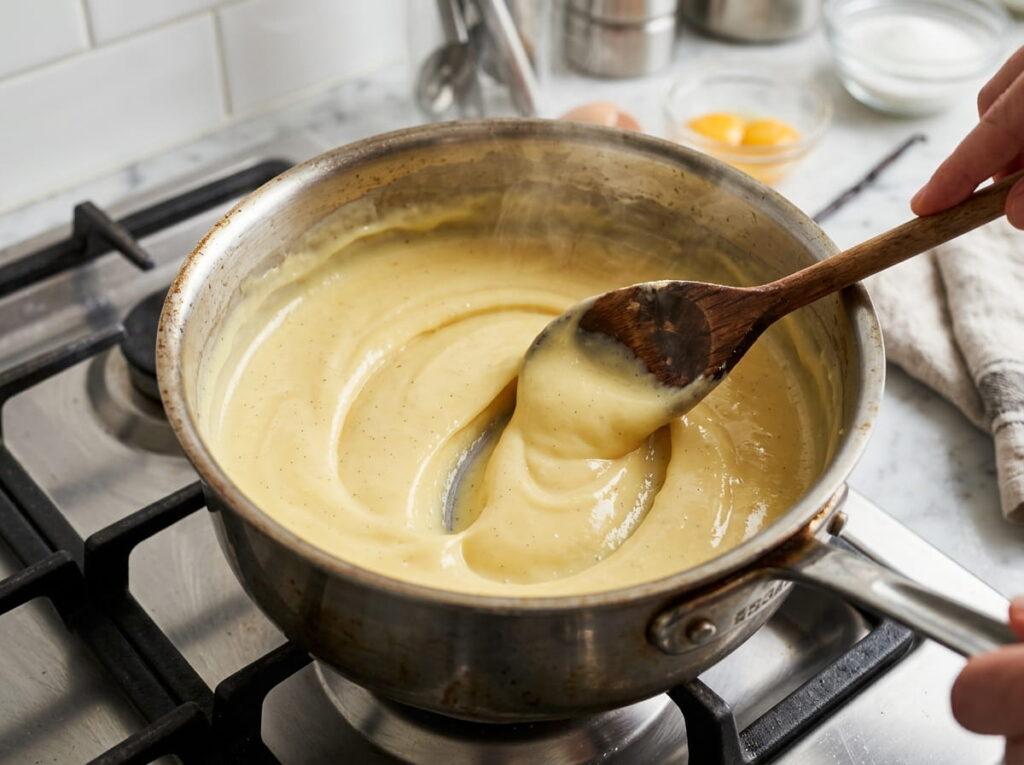
Does the Type of Milk Really Matter in Baking?
Sometimes a lot, sometimes hardly at all.
Milk is roughly 89% to 90% water, but the remaining portion includes protein, fat and sugar. In baking, those components can influence structure, mouthfeel, flavour and browning. The American Society of Baking also notes that milk contributes moisture, protein, colour and flavour, and that milk proteins and lactose are involved in browning.
That sounds as though every substitution should dramatically change a recipe. In practice, many cakes, muffins and quick breads are surprisingly tolerant. The difference becomes more important when milk is a major ingredient or the recipe depends heavily on its protein, fat or thickening behaviour.
A useful rule is simple: the more milk the recipe contains, and the more delicate the finished structure, the more carefully you should choose the substitute.
A Few Mistakes to Avoid
- Using sweetened or vanilla plant milk without considering the recipe. It can add sweetness or flavour you did not intend.
- Treating canned coconut milk like carton coconut beverage. Canned coconut milk is much richer and is not a direct equivalent in every recipe.
- Using water and expecting an identical result. It may work, but it does not bring the same protein, fat, sugar or flavour.
- Assuming a substitute that works in muffins will work equally well in custard. Milk-heavy recipes are less forgiving.
- Confusing milk with buttermilk. Acidity matters when the recipe’s leavening depends on it.
The Kitchen Answers Bottom Line
For most home baking, replacing regular milk is easier than it looks.
If you need a dairy-free substitute, use plain unsweetened soy milk, oat milk or almond milk in the same amount. Soy milk is the best all-around choice when structure matters, while oat milk is an excellent everyday option for cakes, muffins and quick breads.
If you are simply out of fresh milk, reconstituted powdered milk or properly diluted evaporated milk are useful pantry backups. Water can work in an emergency, but expect a less rich result.
And if the recipe is a custard, pastry cream or milk-rich yeast bread, choose your substitute more carefully. That is where the differences between milks stop being theoretical and can show up on the plate.
Missing something else? Use the Kitchen Answers Ingredient Substitute Finder to compare substitutes based on what you’re making, how the ingredient is being used, and what you already have in your kitchen.
Frequently Asked Questions
What is the best milk substitute for baking?
For the widest range of dairy-free baking, plain unsweetened soy milk is the strongest all-around choice because its protein level is closer to dairy milk. For cakes, muffins and quick breads, oat and almond milk also work very well.
Can I substitute oat milk for milk in baking?
Yes. Use plain unsweetened oat milk 1:1 for regular milk in most cakes, muffins, pancakes and quick breads. It may brown a little differently in some recipes.
Can I use almond milk instead of milk in baking?
Yes. Unsweetened almond milk can usually replace regular milk in the same amount in cakes, muffins, cookies and similar baked goods. It is less reliable in milk-heavy custards and pastry creams.
Can I use water instead of milk?
Yes in some forgiving recipes, especially when only a small amount of milk is required. The result may be less rich and may brown differently because water does not contain milk’s protein, fat or sugar.
Can I use soy milk instead of milk in baking?
Yes. Plain unsweetened soy milk can usually be substituted 1:1 and is one of the closest plant-based alternatives to dairy milk for baking.
Is evaporated milk a substitute for regular milk?
Yes, but it should normally be diluted because it is concentrated. Follow the package directions when available. It may retain a mild cooked or caramelized flavour.
Can I use a milk substitute in a recipe that calls for buttermilk?
Not automatically. Buttermilk is acidic and can be part of the recipe’s leavening chemistry. Use a substitute designed specifically for buttermilk.
Looking for other ingredient swaps? Try the Kitchen Answers Ingredient Substitute Finder.