
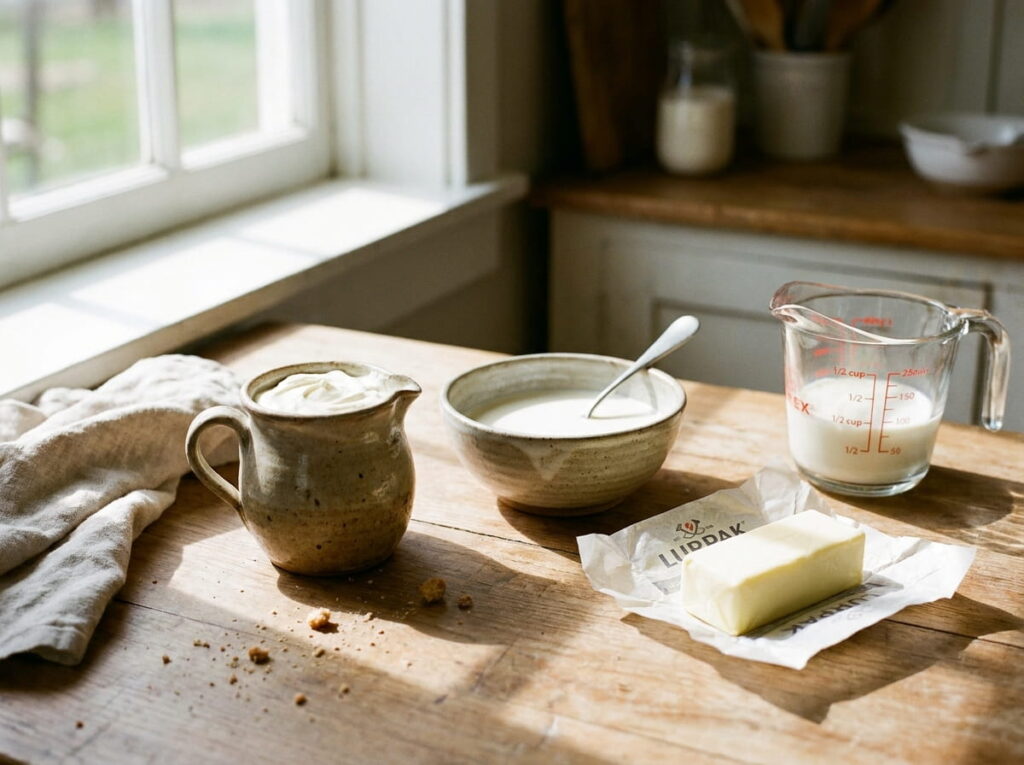
The best heavy cream substitute depends on what you are making. For soups and sauces, use half-and-half or evaporated milk in equal amounts. For baking, mix ¾ cup milk with ¼ cup melted butter. For whipped cream, only chilled coconut cream or a milk-and-gelatin mixture will hold its shape.
That last point is where most people go wrong. Heavy cream is mostly fat, and fat is what lets cream hold air. Almost every pantry swap gives you the richness without the structure, so the question is never just “what can I use instead?” It is “what am I making?”
Quick answer: the best swap for what you are making
| What you are making | Best swap for 1 cup of heavy cream | Will it whip? |
|---|---|---|
| Soups and pan sauces | 1 cup half-and-half or 1 cup evaporated milk | No |
| Creamy pasta sauce | See our pasta sauce guide | No |
| Scones, biscuits, puddings, glazes, ganache | ¾ cup whole milk plus ¼ cup melted butter | No |
| Whipped cream | Chilled coconut cream, or the milk-and-gelatin method below | Yes |
| Dairy-free cooking | Coconut cream, cashew cream, or soy milk plus vegan butter | Coconut and cashew, once chilled |
| Mousse, ice cream, whipped ganache | No reliable pantry swap. Buy the cream. | Not applicable |
Why the swap depends on the recipe
In the United States, a product sold as heavy cream must contain at least 36 percent milkfat, according to the FDA’s standard for heavy cream. That is a lot of fat. King Arthur Baking puts the difference plainly: a cup of heavy cream has roughly 80 to 90 grams of fat, while a cup of whole milk has about 8.
Fat does three jobs in a recipe. It adds richness, it thickens, and when cold it traps air for whipping. A substitute that handles the first two but not the third is perfectly good for soup and useless for a pavlova.
Heavy cream substitute for soups and sauces
This is the easy category. Heat and simmering are forgiving, and the cream is usually there for body and a smooth finish.
- Half-and-half: use 1 cup for 1 cup. It makes a slightly thinner sauce, so simmer gently and avoid a hard boil.
- Evaporated milk: use 1 cup for 1 cup. It has a mild cooked-milk flavour. Make sure the label says evaporated, not sweetened condensed, unless you want soup with dessert intentions.
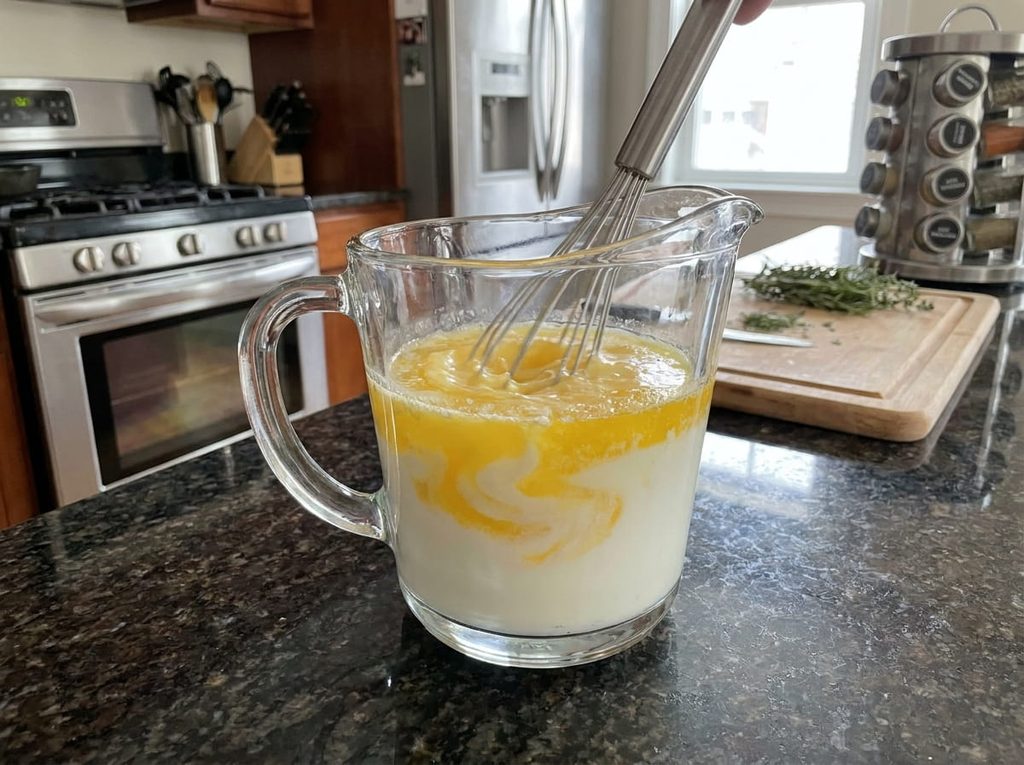
- Milk and butter: ¾ cup whole milk plus ¼ cup melted butter. Whisk the butter in gradually.
- Plain Greek yogurt: ¾ to 1 cup, stirred in after the pan comes off the heat. Yogurt curdles over high heat, and lower-fat yogurt curdles more easily.
For pasta specifically, including cream cheese and white sauce options, see our guide to the best heavy cream substitute for pasta and sauces.
Heavy cream substitute for baking
Baking is less forgiving than cooking because the fat and water balance affects texture. The most dependable swap is milk and melted butter: ¾ cup whole milk plus ¼ cup melted unsalted butter for 1 cup of heavy cream.
King Arthur Baking says this mixture works in scones and biscuits, cream pie fillings, ganache, puddings, icings and glazes, and in recipes where the cream is a minor ingredient. It does not work for anything that has to be whipped, such as mousse, whipped ganache frosting or ice cream.
Beat the milk-and-butter mix as hard as you like. You will get very energetic buttery milk.
Kitchen Answers Tip: Whisk the melted butter into the milk a little at a time, and use the mixture while it is still warm. If it cools and the butter starts to set in flecks, a short whisk over very low heat brings it back together.
Heavy cream substitute for whipping
Whipping needs either enough fat or an added structure. Two options work without real cream.
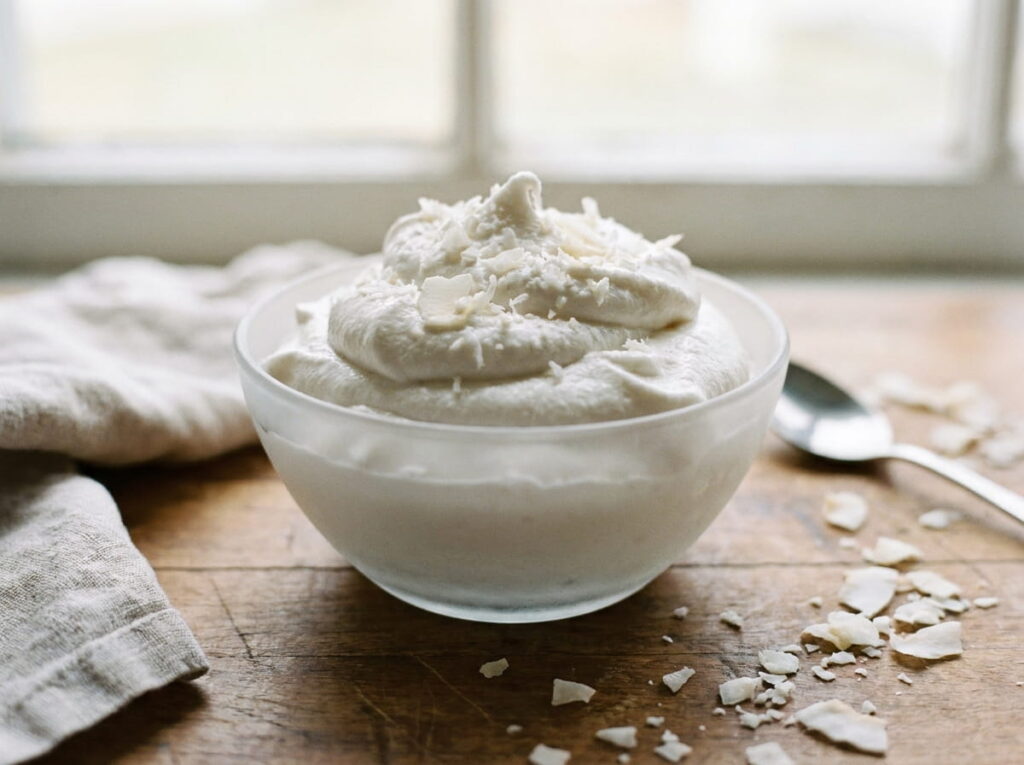
Coconut cream
Chill an unopened 14-ounce can of full-fat coconut milk overnight, without shaking it. Open it, scoop the thick layer from the top into a chilled bowl, leave the watery liquid behind, and beat for about two minutes until soft peaks form. Healthline gives this method, and notes that it keeps up to two weeks in the fridge; whisk it again before serving. It tastes of coconut, which is lovely on a pie and less lovely on a dish where nobody expects it.
Milk and gelatin
Healthline’s dairy method uses 1¼ cups cold whole milk, 2 teaspoons unflavoured gelatin and 2 tablespoons confectioners’ sugar. Stir the gelatin into ½ cup of the milk and let it sit for five minutes, warm it briefly until it is liquid, then let it cool. Whisk the sugar into the remaining milk, add the gelatin mixture, chill for about 20 minutes, and beat until soft peaks form. Overbeating makes it grainy and sticky, and it is best used within two days.
Neither version behaves exactly like real whipped cream, but both are good enough to top a dessert in an emergency.
Dairy-free heavy cream substitutes
- Coconut cream: the easiest vegan swap for cooking and whipping. Use unsweetened coconut cream, not sweetened cream of coconut.
- Cashew cream: blend 1 cup of soaked raw cashews with ¾ cup water and a pinch of salt. Medical News Today lists it for sweet and savoury recipes, including soups and tomato sauces, and says it can be whipped after chilling. It is not safe for anyone with a tree-nut allergy.
- Soy milk and vegan butter: use the same method as milk and butter. King Arthur recommends a vegan butter with a texture close to real butter.
- Pureed silken tofu or white beans: 1 cup of puree for 1 cup of cream, for soups and stews. These thicken a dish but do not whip.
For more milk-based options, see our guide to milk substitutes for baking.
What “heavy cream” means in your country
Heavy cream is mainly a North American name. If your recipe came from a US site and your supermarket has never heard of it, this is the table to use.
| Country | What to buy | Milkfat |
|---|---|---|
| United States | Heavy cream or heavy whipping cream | At least 36% |
| Canada | Whipping cream | 33% or 35% |
| United Kingdom | Whipping cream is the closest match by fat. Double cream is richer. | Whipping 35%, double 48% |
| Australia | Thickened cream for whipping, or pure cream for sauces and soups | About 35% (thickened), about 35 to 40% (pure) |
| New Zealand | Cream | At least 35% |
| Ireland | Check the carton for a cream with 35% or more milkfat | Varies by product |
The UK figures come from the Food Labelling Regulations 1996, which set minimum milkfat for each cream name. For Australia, the Australia New Zealand Food Standards Code (Standard 2.5.2) says a product sold as cream must contain at least 35 percent milkfat, which is why that figure applies in New Zealand too. In Australia, thickened cream contains stabilisers and whips well, while pure cream has none and will not whip to stiff peaks. For Canada, Dairy Farmers of Canada lists whipping cream at 33% or 35%.
For Ireland, I have not found a source that sets out the exact percentages by name, so the reliable rule is to read the milkfat figure on the carton. If your country is not listed here, see the “if your country isn’t listed” section on our About page.
Frequently asked questions
Can I use milk instead of heavy cream?
Milk alone is too thin for most recipes because it has far less fat. It is fine in a soup that only needs a splash of creaminess. For anything else, add butter: ¾ cup whole milk plus ¼ cup melted butter.
Is whipping cream the same as heavy cream?
Not always, because the names differ by country. In the US, heavy cream must have at least 36 percent milkfat. In Canada and the UK, whipping cream is around 35 percent, so it is a close match. Check the percentage on the carton and aim for 35 percent or higher.
Can I use half-and-half instead of heavy cream?
In soups and sauces, yes, in equal amounts. The result is a little thinner. It will not whip.
Can I use evaporated milk instead of heavy cream?
Yes, 1 cup for 1 cup, in savoury cooking. It is thicker than regular milk but it does not whip. Do not confuse it with sweetened condensed milk.
Can you whip a heavy cream substitute?
Only a few. Chilled coconut cream and the milk-and-gelatin method both work. The milk-and-butter mixture, evaporated milk, half-and-half and most plant milks will not.
What is the best dairy-free heavy cream substitute?
Unsweetened coconut cream is the most versatile, since it cooks and whips. Cashew cream has a milder flavour but is not safe for anyone with a nut allergy.
Related Kitchen Answers
- Best Heavy Cream Substitute for Pasta and Sauces
- Best Milk Substitutes for Baking
- Sour Cream Substitute for Baking
- Best Buttermilk Substitutes for Baking
- Ingredient Substitute Finder
About the countries in this guide
Kitchen Answers checks official guidance from six countries: the United States, Canada, the United Kingdom, Ireland, Australia and New Zealand. We chose these because each one publishes clear, detailed food safety advice in English that we can read and check directly, and because most of our readers live there.
If your country isn’t listed, that’s not because its guidance doesn’t matter. We just haven’t been able to check it ourselves yet, and we won’t guess. Your national or local food safety authority is the best place to check. If you can’t find local advice, the World Health Organization’s Five Keys to Safer Food are a reliable starting point anywhere in the world, and the Food Storage Time Finder has an International (WHO) option for the same reason. If you live somewhere hot, food left out spoils faster, so get it into the fridge sooner.
You can read more about how we check our sources on our About page.
Sources
Amounts and cream standards on this page come from the following. Where sources differ, the more specific one is used.
- US Code of Federal Regulations, 21 CFR 131.150: Heavy cream
- King Arthur Baking: Heavy cream substitute
- Healthline: How to make whipped cream with milk
- Medical News Today: Substitutes for heavy cream
- UK Food Labelling Regulations 1996, Schedule 8, Part III
- Dairy Farmers of Canada: Cream types
- Better Homes and Gardens Australia: What is heavy cream in Australia?
- Australia New Zealand Food Standards Code, Standard 2.5.2: Cream