
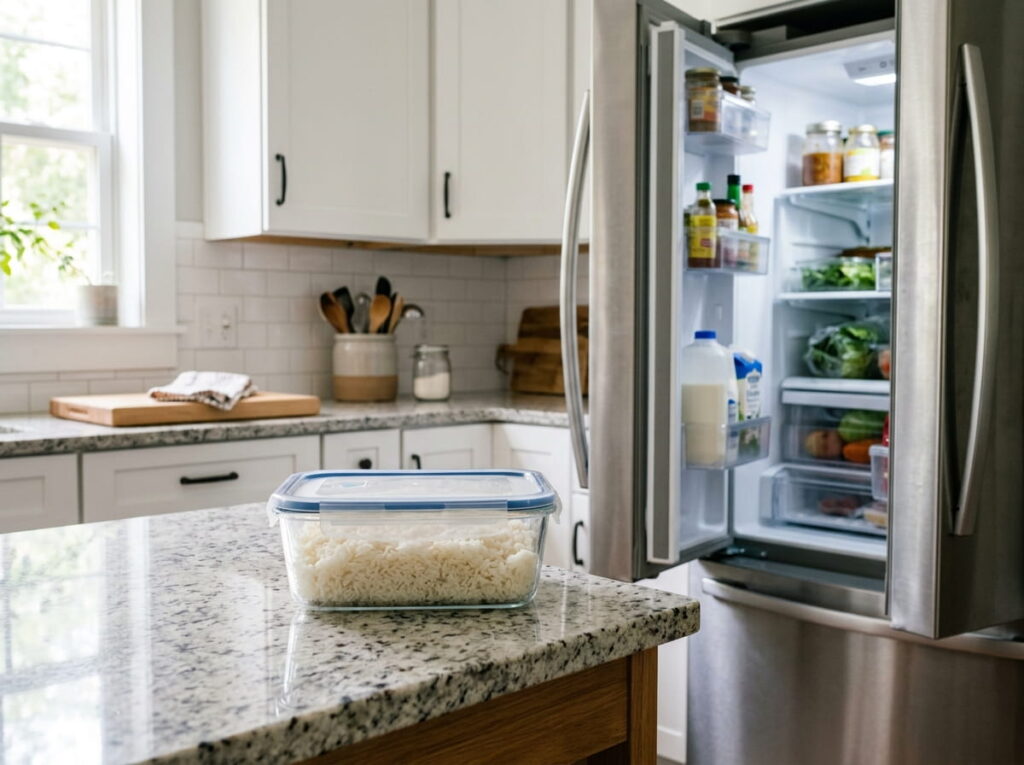
How long does cooked rice last in the fridge? In the United States, USDA’s general leftover guidance is 3 to 4 days. USDA does not publish a separate refrigerator limit specifically for cooked rice. Because rice carries a particular Bacillus cereus risk, several food-safety authorities outside the U.S. recommend a shorter, rice-specific window. The UK’s Food Standards Agency gives cooked rice just 24 hours in the fridge. Australia’s NSW Food Authority and New Zealand’s MPI both shorten their general leftover guidance specifically for rice, to 2 days. Canada’s general leftover guidance runs about 2 to 4 days, with no separate rice-specific figure.
Quick answer: cooked rice storage by region
| Region | Recommended refrigerator time | Note |
|---|---|---|
| United States | 3 to 4 days | USDA’s general leftover guidance; no rice-specific figure published |
| Canada | About 2 to 4 days | General Health Canada leftover guidance; use sooner rather than later |
| United Kingdom | 24 hours | FSA guidance specific to cooked rice |
| Ireland | About 2 to 3 days | General FSAI leftover guidance; no rice-specific figure published |
| Australia | 2 days | NSW Food Authority shortens general leftover guidance specifically for rice and pasta |
| New Zealand | 2 days | MPI guidance specific to rice-based leftovers |
These recommendations assume the rice was cooled and refrigerated promptly and that the fridge is running at a safe temperature. Rice that’s been left at room temperature too long shouldn’t be “saved” by refrigerating it afterward.
If you want an answer based on where you live and the food you actually have, use the Food Storage Time Finder.
Why is cooked rice a food-safety concern?
Rice has a knack for looking completely blameless right up until it isn’t. It can carry spores of a bacterium called Bacillus cereus, and those spores survive normal cooking. The concern isn’t that cooked rice suddenly becomes unsafe once it’s refrigerated; it’s what happens before it gets cold. If cooked rice sits at room temperature too long, surviving spores can germinate, multiply, and produce a toxin, and that toxin is not destroyed by reheating. That’s why how rice is cooled and stored matters just as much as how many days it’s been in the fridge.
Rice affected this way can look and smell completely normal. Food-safety agencies are consistent on this point: harmful bacteria and their toxins aren’t reliably detectable by looking at, smelling, or tasting food. Don’t taste questionable rice to decide whether it’s safe.
How quickly should you refrigerate cooked rice?
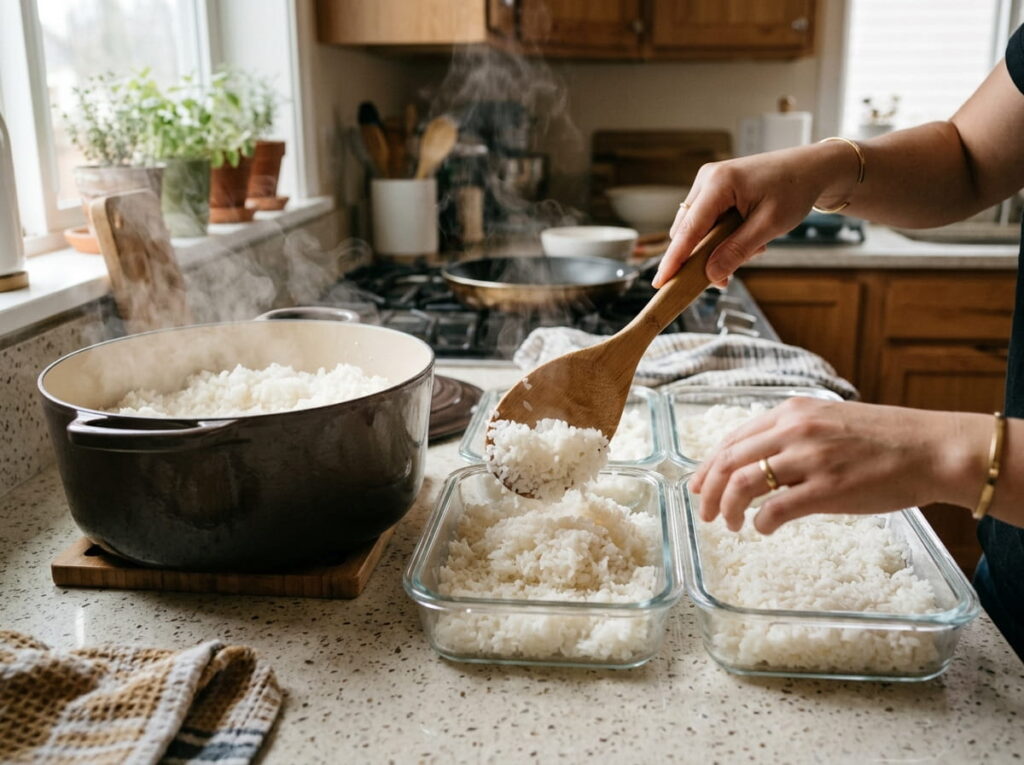
For rice, cooling quickly is particularly important. UK guidance recommends cooling cooked rice within about one hour, while general food-safety guidance in several countries uses two hours as the outer limit for perishable leftovers generally (shortened to one hour above 32°C/90°F). Divide the rice into shallow containers so it cools quickly, rather than leaving a full pot to cool slowly on the counter. The UK’s Food Standards Agency also describes rinsing hot rice in a colander under cold running water as an optional way to speed this up, though the shallow-container method is the simpler default for most home cooks.
You don’t need to wait until rice is completely cold before refrigerating it; the goal is cooling it quickly and not leaving it at room temperature for long, not hitting a specific temperature before the container goes in the fridge.
What about rice in a rice cooker?
Rice cookers don’t automatically make leftover rice safe. If you’re not keeping the rice hot under safe conditions, don’t leave it sitting in the cooker, a steamer, or a pan for hours to cool. The UK’s Food Standards Agency is explicit on this: never leave rice to cool down in the rice cooker, steamer, or pan. Transfer leftovers to shallow containers and refrigerate them promptly instead. The “keep warm” setting is doing you a favor for an evening, not a weekend.
How long does cooked rice last in the fridge, country by country?
United States. USDA’s general leftover guidance is 3 to 4 days at 4°C/40°F or below. There’s no separate USDA figure for rice specifically.
Canada. About 2 to 4 days under general Health Canada leftover guidance, at 4°C/40°F or below; use sooner rather than later. Health Canada doesn’t publish a rice-specific figure.
United Kingdom. The FSA takes a specifically more cautious approach for rice: cool it within about an hour, refrigerate it, and use it within 24 hours. Reheat only once.
Ireland. FSAI’s general leftover guidance is about 2 to 3 days. There’s no FSAI figure specific to rice, so the same Bacillus cereus caution that applies everywhere is worth following here too.
Australia. NSW Food Authority gives general leftovers 3 days but specifically shortens cooked rice and pasta to 2 days, and recommends reheating only once, steaming hot.
New Zealand. MPI gives rice-based leftovers a specific 2-day window, because spores can survive cooking and any toxin they produce isn’t destroyed by reheating.
We’ve checked guidance for these six countries directly. If yours isn’t listed, see how we research food storage guidance.
What about rice that’s been left out overnight?
Throw it away. Rice sitting at room temperature overnight, or for several hours after a meal, is well past the 1 to 2 hour window most guidance recommends. Refrigerating it the next morning doesn’t make it safe again. Don’t taste it to check.
Kitchen Answers Tip: If you regularly cook rice in large batches, freezing individual portions is usually more convenient than trying to work through one large container within a few days.
Can you reheat cooked rice?
Yes, if it was cooled and refrigerated properly beforehand. Reheating itself isn’t the main risk; how the rice was handled before reheating is what matters. Health Canada recommends reheating leftovers to at least 74°C/165°F. The UK’s FSA recommends reheating rice only once, until it’s steaming hot throughout, testing for cold spots and reheating longer if needed. NSW Food Authority gives the same reheat-only-once, steaming-hot guidance specifically for rice and pasta.
Microwaves can heat rice unevenly, so break up clumps, add a splash of water if it’s dried out, cover loosely, stir partway through, and confirm it’s steaming hot all the way through before serving.
Does reheating destroy the risk?
Not the part that matters most. Reheating kills active bacteria, but if Bacillus cereus toxin has already formed because the rice sat out too long before its first refrigeration, that toxin is heat-stable and survives normal reheating. That’s why the guidance focuses on cooling rice quickly the first time, not on reheating it thoroughly later to fix a mistake.
Can you eat cold cooked rice?
Yes, if it’s been cooled quickly and stored safely, and your local guidance allows it. Chilled rice is the basis for dishes like rice salads and sushi-style preparations. Whether rice is eaten hot or cold isn’t the deciding factor; whether it was cooled quickly and kept properly refrigerated is.
What is “fried rice syndrome”?
It’s an informal name, used by sources including Cleveland Clinic, for Bacillus cereus food poisoning linked to rice. It picked up the nickname because it commonly shows up in restaurant-style fried rice, where rice is cooked, left out for a stretch, then stir-fried again later, which is close to a textbook case for letting spores germinate and produce toxin. It’s a memorable name for a genuinely unglamorous way to feel awful, which is probably why it stuck. The name describes the classic scenario, not a separate risk from plain rice handled the same way.
Does the type of rice matter?
Not for food-safety purposes. White rice, brown rice, basmati, jasmine, wild rice, and rice mixed into other dishes all carry the same basic Bacillus cereus consideration, because the spores come from the raw rice itself. Don’t assume brown rice keeps longer, or that white rice is automatically safer; follow the same storage guidance regardless of variety.
Does sushi vinegar or seasoning change the storage time?
It can help, somewhat. New Zealand’s MPI notes that sushi rice, which typically contains vinegar along with sugar and salt, has conditions that help prevent Bacillus cereus growth. That’s a real effect, not just a taste choice, but it isn’t a substitute for cooling rice quickly and refrigerating it promptly. Treat seasoned or vinegared rice with the same cautious timeline as plain rice rather than as an exception.
How can you tell if rice has gone bad?
Ordinary spoilage signs still apply: an off or sour smell, a slimy texture, or visible mold all mean it should be thrown out. But Bacillus cereus toxin doesn’t change how rice looks, smells, or tastes, so “it seems fine” isn’t a safety test. If rice was left out too long before its first refrigeration, or has passed the recommended window for your region, the safer call is to discard it regardless of appearance.
Can you freeze cooked rice?
Yes. Portion it into airtight, freezer-safe containers or bags before freezing, and cool it properly first, the same way you would before refrigerating it. Frozen rice remains safe indefinitely when kept continuously frozen, although its texture and flavor will gradually decline over time.
How should frozen rice be thawed?
The refrigerator is the simplest and safest option. Microwave thawing also works if you’re going to eat the rice right away afterward. Avoid thawing rice on the counter at room temperature, for the same reason you wouldn’t leave freshly cooked rice sitting out.
What is the best way to store cooked rice?
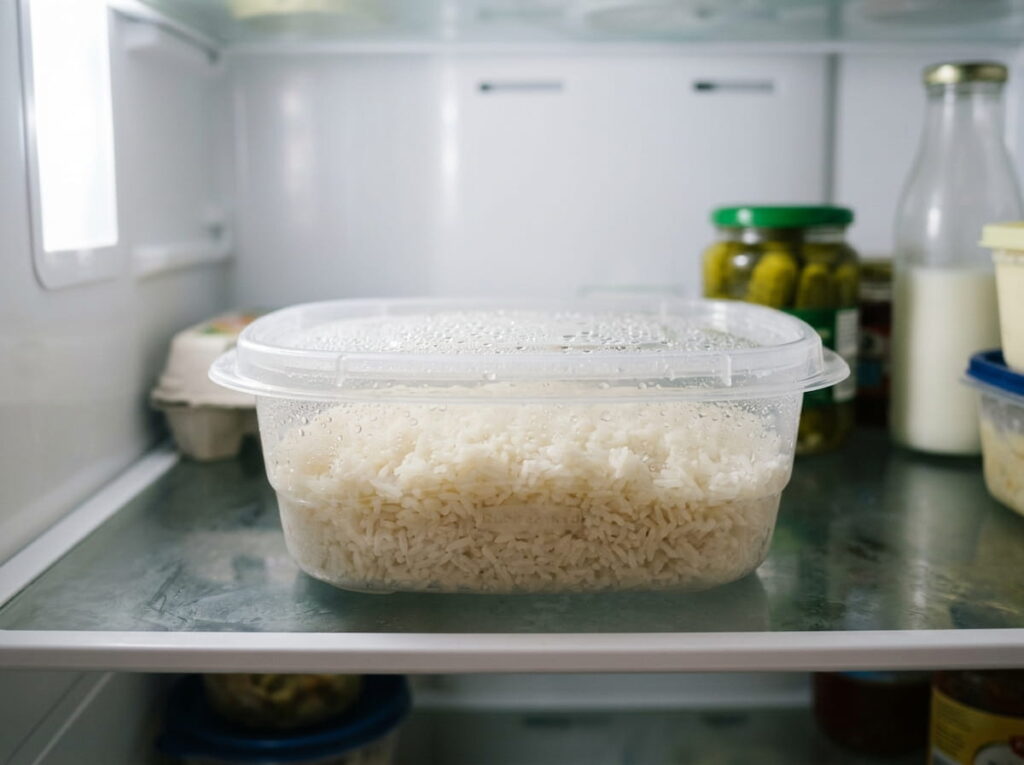
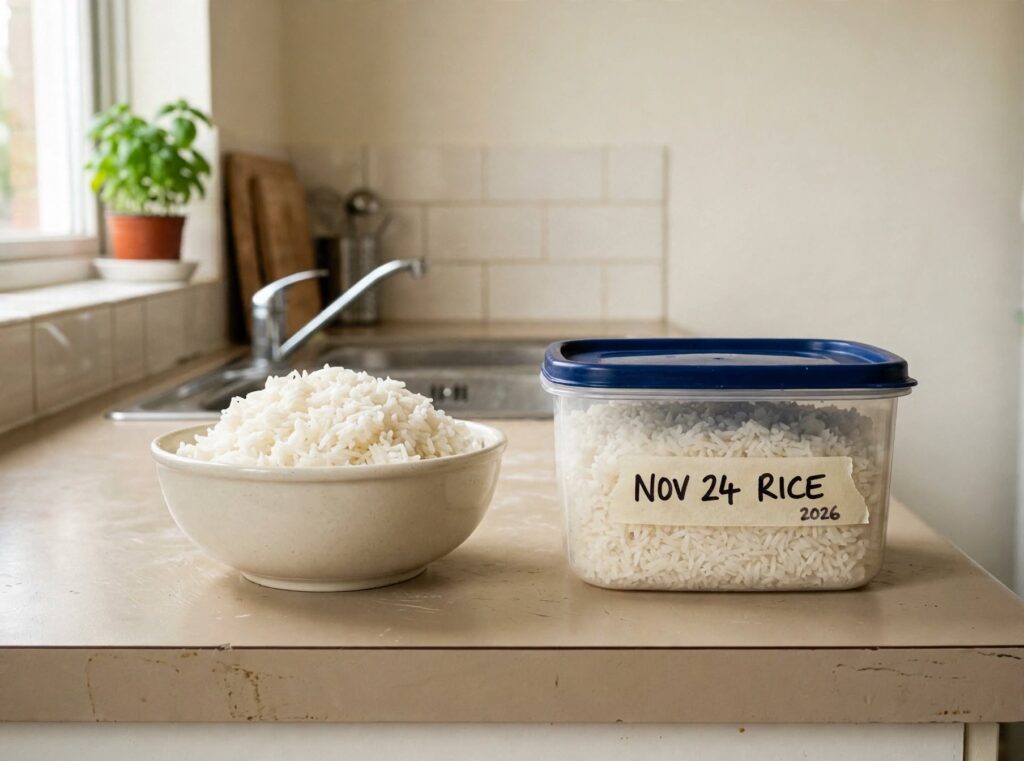
Cool it quickly using shallow containers, refrigerate it promptly rather than letting it cool fully on the counter or in the cooker, keep the fridge at the right temperature for your region, cover it once it’s cool, label the container with the date, and reheat only the portion you’re eating, once, until it’s steaming hot throughout.
Frequently asked questions
How long can you keep fried rice in the fridge?
The same guidance as plain cooked rice applies. Follow your region’s rice-specific figure where one exists, or lean toward the shorter end of the general guidance, since the Bacillus cereus risk comes from the rice itself rather than how it’s later prepared.
Is it safe to eat rice left out overnight?
No. It’s well past the 1 to 2 hour window most guidance recommends, and should be discarded rather than refrigerated or reheated.
Can you eat 3-day-old rice?
That’s within general leftover guidance in the US, Canada, and Ireland, but beyond the UK’s 24-hour rice-specific limit and Australia and New Zealand’s 2-day rice-specific limit. Follow the guidance for your region.
Why is rice riskier than pasta or bread?
Uncooked rice is a common natural source of Bacillus cereus spores that survive cooking. Pasta carries some similar risk, which is why NSW groups rice and pasta together, but bread doesn’t carry the same concern.
How long is rice good in the freezer?
Safe indefinitely if kept continuously frozen, though quality gradually declines over time.
Does sushi vinegar make rice last longer in the fridge?
It helps inhibit Bacillus cereus growth, according to MPI, but it isn’t a substitute for cooling rice quickly and refrigerating it promptly. Treat it with the same cautious timeline as plain rice.
Check the Storage Time for What You Have
The Kitchen Answers Food Storage Time Finder lets you search for foods such as cooked chicken, rice, spaghetti sauce, and other common refrigerator items, then choose your region for more relevant guidance.
Related Kitchen Answers
- Food Storage
- How Long Do Leftovers Last in the Fridge?
- How Long Does Cooked Chicken Last in the Fridge?
- How Long Does Spaghetti Sauce Last in the Fridge?
About the countries in this guide
Kitchen Answers checks official guidance from six countries: the United States, Canada, the United Kingdom, Ireland, Australia and New Zealand. We chose these because each one publishes clear, detailed food safety advice in English that we can read and check directly, and because most of our readers live there.
If your country isn’t listed, that’s not because its guidance doesn’t matter. We just haven’t been able to check it ourselves yet, and we won’t guess. Your national or local food safety authority is the best place to check. If you can’t find local advice, the World Health Organization’s Five Keys to Safer Food are a reliable starting point anywhere in the world, and the Food Storage Time Finder has an International (WHO) option for the same reason. If you live somewhere hot, food left out spoils faster, so get it into the fridge sooner.
You can read more about how we check our sources on our About page.
Sources
This article was researched using current guidance from the USDA Food Safety and Inspection Service, the UK Food Standards Agency, the Food Safety Authority of Ireland, NSW Food Authority, New Zealand’s Ministry for Primary Industries, and Cleveland Clinic.