
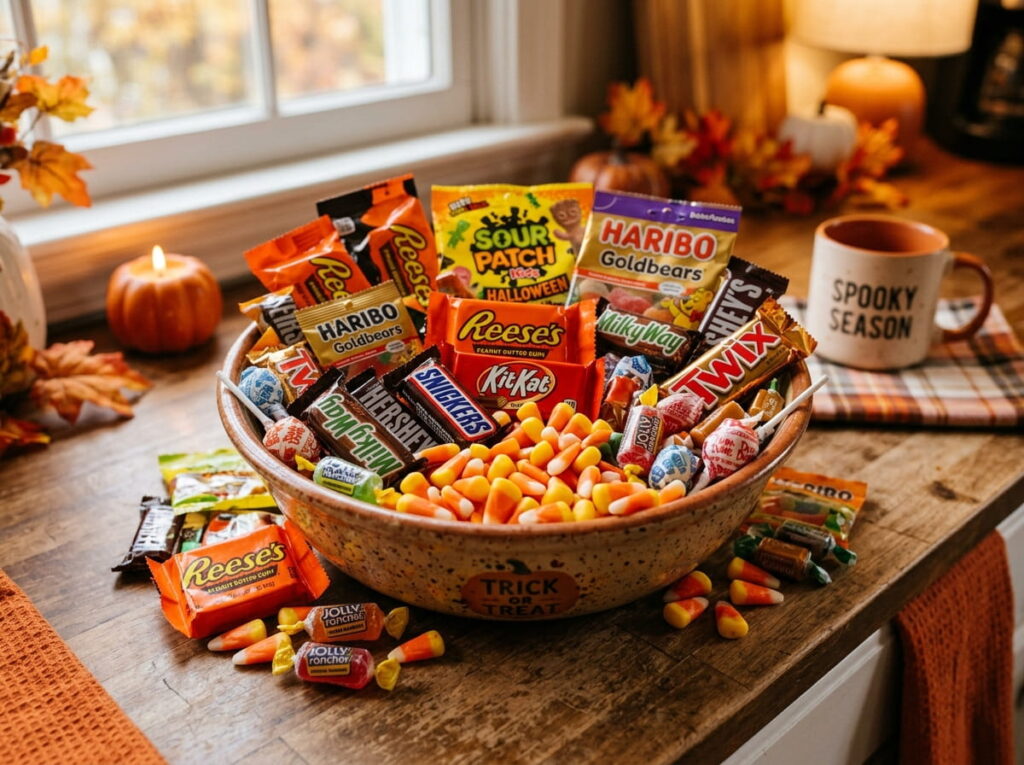
How long does Halloween candy last? Most store-bought Halloween candy is good for months past October 31 if it’s kept sealed in a cool, dry place. Dark chocolate can last up to two years, hard candy and gummies about a year, and even opened bags of candy corn or caramels are fine for several months. The “best by” date on the wrapper is about peak flavor, not safety — properly stored candy that looks and smells normal is safe to eat well after that date.
Quick answer: how long different Halloween candies last
These are room-temperature shelf life ranges for unopened, properly stored candy. Once a bag is opened, use the shorter end of the range.
Worth saying plainly: these are food-science quality estimates, not a government safety rule (see Sources below). Candy that’s a few months past these numbers isn’t automatically unsafe — what actually matters is covered in the sections below.
| Candy type | Unopened shelf life | Opened shelf life |
|---|---|---|
| Dark chocolate | 1 to 2 years | Same, if resealed well |
| Milk and white chocolate | 8 to 10 months | 6 to 9 months |
| Hard candy and lollipops | Up to 1 year | Up to 1 year |
| Gummy and jellied candy | About 12 months | 6 to 9 months |
| Candy corn | About 9 months | 3 to 6 months |
| Caramels | 6 to 9 months (up to 12) | 6 to 9 months |
| Gum | 6 to 9 months | Same, if resealed |
Not sure about something else in the pantry? Check it in the Food Storage Time Finder.
Does the “best by” date mean candy is unsafe after that?
No. Candy manufacturers print a “best by” or “best if used by” date to mark peak quality, not a safety cutoff. According to food shelf-life reference StillTasty, candy is generally still safe to eat after that date as long as it has been stored properly and the package isn’t damaged. What changes with time is texture and flavor — chocolate can lose its snap, hard candy can turn cloudy or sticky, and gummies can dry out or get tough. None of that makes the candy unsafe on its own.
What “best before” and “use by” actually mean, by country
Halloween candy almost always carries a best-before date rather than a use-by date, but it helps to know the difference — the terms aren’t interchangeable, and every food safety authority we checked draws the same line between them.
- Canada: The CFIA is explicit that “best before dates are not indicators of food safety, neither before nor after the date” — they’re about freshness and quality. Expiration dates are a separate, narrower label used only for a short list of foods like infant formula.
- United States: USDA’s FSIS says a “Best if Used By/Before” date “indicates when a product will be of best flavor or quality. It is not a purchase or safety date,” and food without spoilage signs is fine to eat beyond it.
- United Kingdom: UK guidance follows the same split as the other countries here — best-before is about quality, use-by is the one tied to safety.
- Ireland: The FSAI says “many foods that are past their ‘best before’ date may be safe to eat, but their quality may have deteriorated,” and reserves use-by dates for perishable foods like milk and meat, which it calls unsafe once that date passes.
- Australia and New Zealand: FSANZ says food with a best-before date “can legally be sold after that date provided the food is fit for human consumption,” while use-by “can’t legally be sold after this date because they may pose a health or safety risk.” New Zealand’s MPI puts it simply: “if it’s past its use-by — say goodbye,” but for best-before, “if it looks and smells all right — it probably is.”
The practical takeaway is the same everywhere: read the date type on the package, not just the date itself, and let the candy’s actual condition — smell, texture, packaging — be the final word rather than the printed date alone.
How long does chocolate last?
Dark chocolate has the longest shelf life of any common Halloween candy — up to 1 to 2 years when it’s wrapped and kept in a cool, dark, dry spot, according to Virginia Tech food science professor Alexis Hamilton. Milk and white chocolate don’t last quite as long because of their milk solids and higher fat content; expect 8 to 10 months at most, and closer to 6 to 9 months once a bag is opened.
If chocolate develops a dull, whitish-gray film, that’s “bloom” — either fat rising to the surface from temperature swings, or sugar crystallizing after moisture exposure. Bloom looks unappetizing, but it’s a quality issue, not a safety one. Bloom just means your chocolate got camera-shy, not that it went bad. The chocolate is still safe to eat.
How long do hard candies and lollipops last?
Hard candy and lollipops are the most shelf-stable Halloween treats — up to a year at room temperature, whether the bag is opened or not. Their low moisture content makes them naturally resistant to spoilage. Over time they can turn cloudy, get sticky, or absorb odors from nearby food, but that’s a storage and quality issue rather than a safety one.
How long do gummy and jellied candies last?
Unopened gummy and jellied candies (gummy bears, jelly beans, fruit snacks) last about 12 months. Once opened, plan on 6 to 9 months before texture really suffers — they tend to dry out and get tough, or in humid conditions, turn sticky and clump together. An airtight container slows both problems down.
How long does candy corn last?
Unopened candy corn is good for about 9 months. Once the bag is open, that drops to 3 to 6 months, since candy corn picks up moisture from the air quickly and turns hard or grainy. It’s the candy everyone loves to argue about, but at least there’s no debate on how to store it. Reseal the bag tightly or move leftovers to an airtight container right after opening.
How long do caramels last?
Caramels typically last 6 to 9 months, and up to a year if they’re individually wrapped and kept somewhere cool. Heat is caramel’s biggest enemy — it softens and can eventually turn caramel grainy or cause pieces to stick together in the bag.
What about gum?
Sealed gum lasts 6 to 9 months. After that it tends to dry out and lose its flavor and chew rather than becoming unsafe. Keep it in a cool, dry place away from direct sunlight, which speeds up both flavor loss and hardening.
How to store leftover Halloween candy
Whatever the candy type, the same few habits make it last toward the longer end of these ranges:
- Store in a cool, dry spot — ideally around 55 to 60°F (13 to 16°C), away from the stove, a sunny window, or anywhere that gets warm during the day.
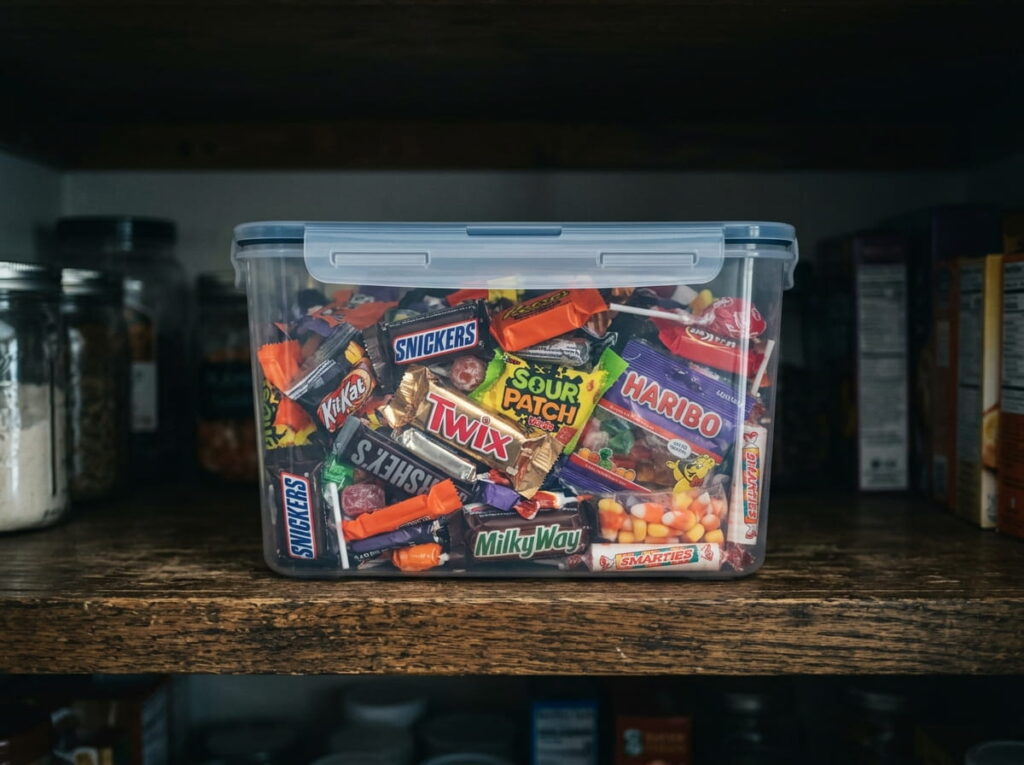
- Move opened bags into a sealed, airtight container or a resealable freezer bag with the air pressed out.
- Keep candy away from direct sunlight and humidity, both of which speed up melting, stickiness and bloom.
- Store strong-smelling candy (mint, cinnamon, black licorice) separately from chocolate — chocolate readily absorbs other flavors and odors.
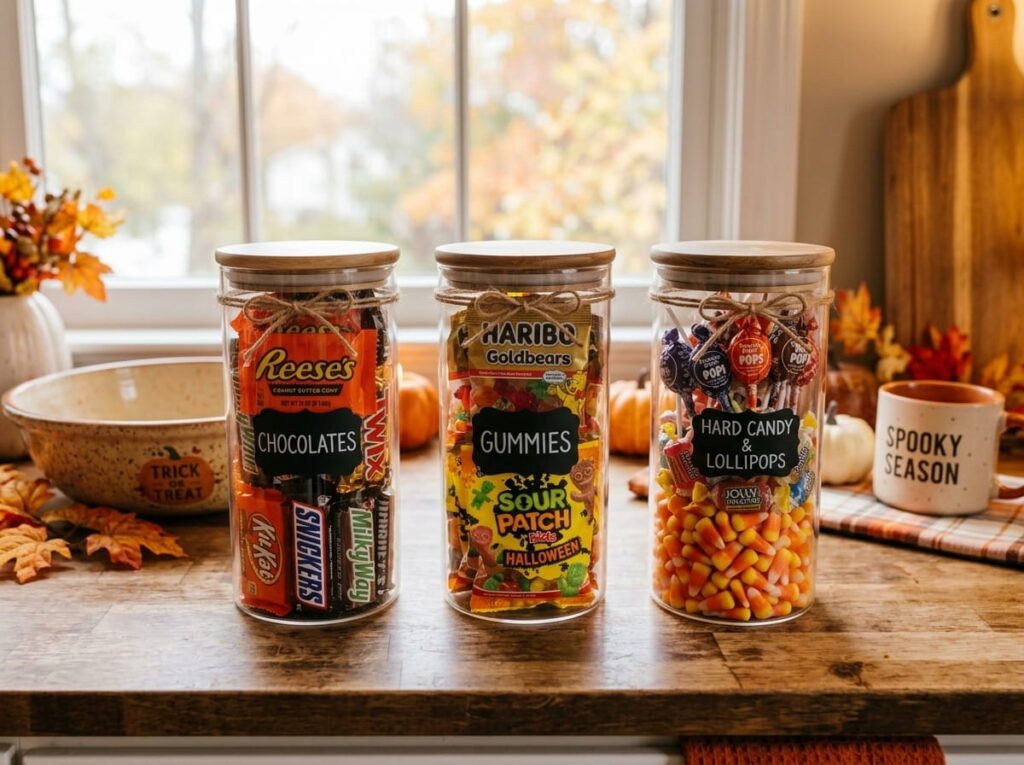
Kitchen Answers Tip: Before storing a mixed bowl of trick-or-treat candy, sort it by type into separate containers. It’s a two-minute job that keeps chocolate from picking up mint or licorice flavors, and it makes it much easier to portion candy out later instead of digging through one giant bag. Future you, elbow-deep in a candy bowl in January, will appreciate the system.
Can you freeze Halloween candy?
Yes. Milk and white chocolate, hard candy and gummies all freeze well, and freezing extends chocolate’s shelf life to roughly 12 to 18 months, according to registered dietitian Alexa Scotto of Jersey Shore University Medical Center. Pack candy in a moisture- and vapor-proof container or freezer bag with the air pressed out, so it doesn’t pick up freezer odors or develop excess ice crystals. Candy with fruit or nut fillings doesn’t freeze as well and is better kept at room temperature.
To thaw, let candy come back to room temperature in its sealed container before opening — this helps prevent condensation from forming on the surface, which is what usually triggers chocolate bloom.
Signs your Halloween candy has gone bad
Candy rarely becomes unsafe the way perishable food does, but it’s not indestructible. Throw candy out if you notice:
- Visible mold — more likely on anything with fruit filling, caramel, or homemade treats than on plain chocolate or hard candy
- An off odor or off flavor compared to how the candy normally tastes
- A bloated, puffed-up, or leaking sealed package, which can mean something is growing inside
- A damaged, torn, or previously opened wrapper on candy you didn’t open yourself
- The product has been named in a food recall
When in doubt, throw it out — that guidance holds for candy just as much as it does for anything else in the kitchen.
A quick note on candy safety for kids
This article is mainly about shelf life, but two related safety points are worth covering while you’re sorting through a trick-or-treat haul, since neither is really about how old the candy is.
First, inspect before eating: only allow commercially wrapped candy with intact, unopened packaging. Anything unwrapped, torn, or otherwise looking tampered with should be thrown out rather than eaten, and it’s worth a quick check that none of it has been caught up in a food recall. Second, age matters more than freshness: hospital dietitians advise that children under 2 shouldn’t have candy at all because of choking risk, and kids ages 2 to 5 should stick to soft, easy-to-chew options rather than hard candy, whole gum, or anything sticky.
FAQ: Halloween candy storage
Is it safe to eat Halloween candy after the “best by” date?
Generally yes, as long as it’s been stored properly and the package isn’t damaged. The date reflects peak quality, not a safety cutoff.
Why did my chocolate turn white or gray?
That’s chocolate “bloom” — fat or sugar rising to the surface after temperature swings or moisture exposure. It looks off but is safe to eat.
How long can Halloween candy sit out in a bowl?
Wrapped candy in a bowl at room temperature is fine for the same shelf-life ranges above — being in a bowl instead of a bag doesn’t shorten its life, though it will pick up more dust and lose freshness faster if it sits uncovered for weeks.
Does Halloween candy need to be refrigerated?
No. A cool pantry or cupboard around 55 to 60°F works better than the fridge, which can introduce condensation and encourage chocolate bloom when candy is moved in and out.
Can you freeze Halloween candy?
Yes, for chocolate, hard candy and gummies — freezing can stretch chocolate’s shelf life to 12 to 18 months in an airtight, moisture-proof container. Candy with fruit or nut filling is better left at room temperature.
What Halloween candy lasts the longest?
Dark chocolate and hard candy last the longest — up to 1 to 2 years for dark chocolate and up to a year for hard candy, when both are kept sealed in a cool, dry place.
Check How Long Anything Else Lasts
Have other leftovers to figure out? The Food Storage Time Finder gives a specific answer for whatever’s in your fridge, freezer or pantry.
Related Kitchen Answers
Sources
Shelf-life figures and storage guidance in this article come from food science extension experts at Kansas State University and Virginia Tech, a registered dietitian’s guidance published by Jersey Shore University Medical Center, and the food shelf-life reference StillTasty. Best-before and use-by terminology is checked directly against the food safety authorities for each country named above.
- Kansas State University — When Sweet Treats Go Bad: Food Science Experts Offer Advice on the Shelf Life of Candy
- Virginia Tech News — Trick or treat: how long is Halloween candy safe to eat?
- Hackensack Meridian Health — Your Halloween Candy Questions Answered
- StillTasty — How Long Does Leftover Halloween Candy Last?
- Canadian Food Inspection Agency — Best before, expiration and more
- USDA FSIS — Food Product Dating
- Food Safety Authority of Ireland — Shelf-life: Best Before and Use By Dates
- Food Standards Australia New Zealand — Use-by and Best-before Dates
- New Zealand Ministry for Primary Industries — How to Read Food Labels